Rock guide
How to Identify Lapis Lazuli
Rock (lazurite ± calcite ± pyrite)
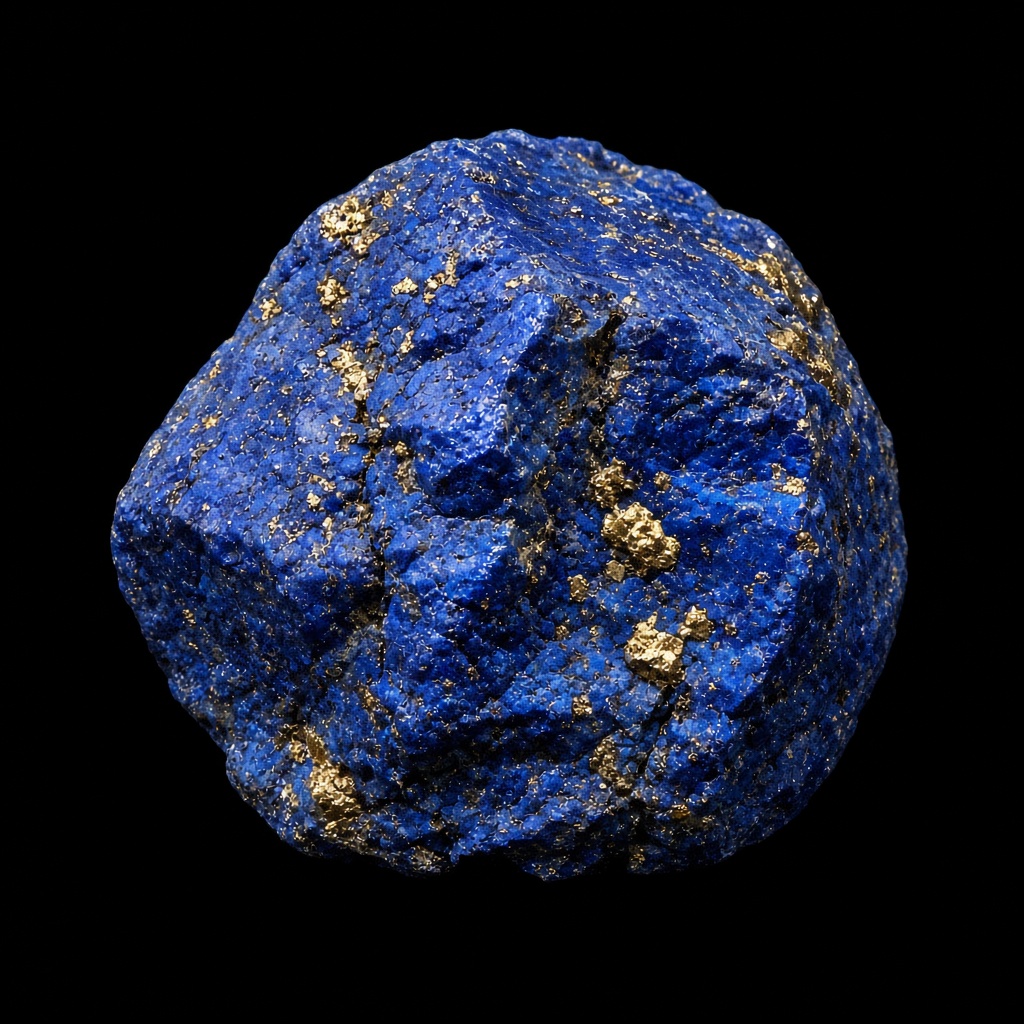
Lapis lazuli is a deep royal-blue metamorphic rock built from lazurite with calcite and pyrite. Identify it by intense blue mottled with white calcite and golden pyrite flecks, aggregate Mohs 5–5.5, and dull-to-vitreous polish that never shows copper-green.
About Lapis Lazuli
Lapis lazuli is a deep royal-blue metamorphic rock built from lazurite with calcite and pyrite. Identify it by intense blue mottled with white calcite and golden pyrite flecks, aggregate Mohs 5–5.5, and dull-to-vitreous polish that never shows copper-green.
Lapis Lazuli is filed under rocks in the RockScan directory. Composition: Lazurite-rich metamorphic rock. It forms via contact metamorphism of limestones. Typical occurrence: Afghanistan (Badakhshan), Chile, Russia. For the broader method, see how to identify rock types.
Lapis Lazuli properties
| Mohs hardness | 5–5.5 |
|---|---|
| Class | rock |
| Scientific name | Rock (lazurite ± calcite ± pyrite) |
| Color | Deep royal blue with pyrite flecks |
| Luster | Dull to vitreous |
| Crystal system / texture | Cubic (lazurite) |
| Composition | Lazurite-rich metamorphic rock |
| Formation | Contact metamorphism of limestones |
| Occurrence | Afghanistan (Badakhshan), Chile, Russia |
How to identify Lapis Lazuli
- Deep blue rock with white calcite mottling and golden pyrite flecks.
- Aggregate hardness 5–5.5; takes a soft polish, not a glass shine.
- No copper-green zones (rules out azurite mixes); veins are calcite-white.
Lookalikes to rule out
- Sodalite: Sodalite lacks golden pyrite flecks and shows only white veining; fine lapis carries pyrite with brighter blue zones.
- Dyed jasper: Dyed jasper looks uniformly inky with dye pooling in cracks; lapis shows natural lazurite-calcite-pyrite mottling.
- Azurite: Azurite is a single copper mineral with malachite-green rims; lapis is a multimineral rock with pyrite, never copper green.
Photo tips for Lapis Lazuli ID
- Show golden pyrite flecks sparkling against deep blue — the money detail for lapis.
- Photograph white calcite mottling honestly; heavy calcite lowers grade and documents naturally.
- Use soft light; harsh flash blows out blue into purple and hides pyrite glints.
Snap one specimen in natural light, then open the result in the online studio or the rock identifier app.
Lapis Lazuli FAQ
How do you identify lapis lazuli?
Look for royal-blue rock with pyrite gold and calcite white. Sodalite lacks pyrite; dyed jasper looks uniformly inky.
Lapis vs sodalite?
Pyrite flecks plus brighter blue patches mark lapis; sodalite shows white veins alone and often fluoresces orange.
What lowers lapis grade?
Heavy white calcite mottling and missing pyrite — top Afghan grades are intensely blue with fine even pyrite.
How to identify lapis lazuli
Lapis commands premium prices, so dyed stones and sodalite ride its name. Authentic pieces show a three-mineral signature:
- Royal blue ground: intense lazurite blue, mottled rather than flat-dyed.
- Pyrite gold: fine golden flecks scattered through the blue — sodalite never has them.
- Calcite white: soft white mottling; heavy white patches mark lower grades, not fakes.
- Hardness 5–5.5: a knife leaves only a faint mark; dyed howlite (~3.5) gouges easily.
- Photo confirm: macro the pyrite glints in soft light, then RockScan against sodalite and azurite.
Lapis vs sodalite vs dyed jasper vs azurite
- Sodalite: white veins without pyrite gold; lapis always shows some metallic flecking.
- Dyed jasper: uniform inky blue with dye concentrated in cracks and drill holes.
- Azurite: deeper azure single mineral with green malachite transitions, never pyrite-calcite mottling.
Photo tips for lapis grade
Soft light plus a pyrite-glint macro documents both authenticity and grade. Compare sodalite, azurite, and jasper guides, then confirm in the online studio or rock identifier app.
Related rocks to compare
Browse all: rocks · minerals · crystals · directory · what rock is this · rock vs mineral vs crystal. Confirm with the online studio or rock identifier app.