Mineral guide
How to Identify Azurite
Cu₃(CO₃)₂(OH)₂
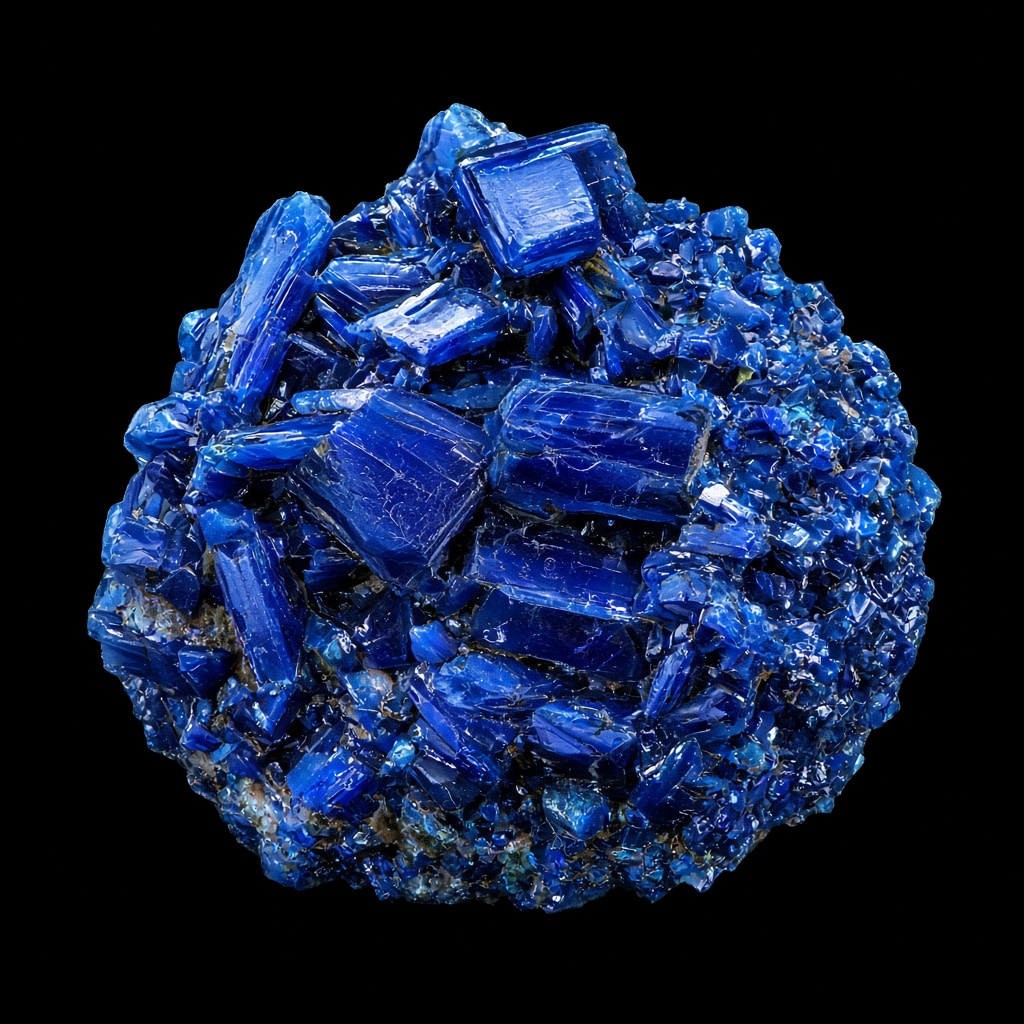
Azurite is a deep azure-blue copper carbonate (Cu₃(CO₃)₂(OH)₂) with vitreous-to-adamantine luster. Identify it by intense midnight-blue color, Mohs 3.5–4, sparkling crystal aggregates, and frequent green malachite association in copper oxidation zones.
About Azurite
Azurite is a deep azure-blue copper carbonate (Cu₃(CO₃)₂(OH)₂) with vitreous-to-adamantine luster. Identify it by intense midnight-blue color, Mohs 3.5–4, sparkling crystal aggregates, and frequent green malachite association in copper oxidation zones.
Azurite is filed under minerals in the RockScan directory. Composition: Copper carbonate hydroxide. It forms via oxidation zones of copper deposits. Typical occurrence: Arizona, Morocco, Namibia, France, Australia. For the broader method, see how to identify rock types.
Azurite properties
| Mohs hardness | 3.5–4 |
|---|---|
| Class | mineral |
| Scientific name | Cu₃(CO₃)₂(OH)₂ |
| Color | Deep azure blue |
| Luster | Vitreous to adamantine |
| Crystal system / texture | Monoclinic |
| Composition | Copper carbonate hydroxide |
| Formation | Oxidation zones of copper deposits |
| Occurrence | Arizona, Morocco, Namibia, France, Australia |
How to identify Azurite
- Deep azure blue — darker and more vitreous than sodalite.
- Mohs 3.5–4; often sparkling druzy or nodular masses.
- Green malachite rims or matrix signal copper-zone origin.
Lookalikes to rule out
- Lapis lazuli: Lapis is a rock mixing lazurite with calcite and pyrite flecks; azurite is a single copper carbonate, often with green malachite rims.
- Sodalite: Sodalite is opaque royal blue with white veins and no copper association; azurite is deeper azure, often sparkling with crystal faces.
- Malachite: Malachite is the green alteration partner (same deposits); azurite's deep blue shifts green only where it alters.
Photo tips for Azurite ID
- Shoot in soft daylight — flash washes azurite's deep azure toward flat navy.
- Show green malachite rims and associations; the blue-green pairing is diagnostic context.
- Capture sparkling crystal faces on nodular specimens; druzy azurite glitters distinctively.
Snap one specimen in natural light, then open the result in the online studio or the rock identifier app.
Azurite FAQ
How do you identify azurite?
Look for intense azure-blue copper mineral with vitreous sparkle and malachite association. Sodalite has white veins; lapis carries pyrite flecks.
Azurite vs lapis?
Lapis is a blue rock with pyrite and calcite; azurite is a pure copper carbonate, often edged in green malachite.
Why does azurite turn green?
Azurite slowly alters to malachite on exposure — many specimens show blue cores with green rims, a desirable natural transition.
How to identify azurite
Deep-blue stones get mislabeled constantly, and azurite's copper context is the fix. Check color depth, sparkle, and association:
- Azure depth: intense midnight azure — deeper and more vitreous than sodalite's flat royal blue.
- Sparkle: druzy crystal faces glitter under side light; dyed stones look waxy and uniform.
- Malachite pairing: green rims, spots, or matrix confirm copper oxidation-zone origin.
- Hardness 3.5–4: a knife scratches it; harder blue stones (sodalite ~5.5–6) resist more.
- Photo confirm: soft-daylight shots of blue-green transitions, then RockScan against lapis and sodalite.
Azurite vs lapis vs sodalite vs malachite
- Lapis lazuli: blue rock with golden pyrite flecks and white calcite — azurite is a single mineral with malachite instead.
- Sodalite: opaque with white veining and no copper-green association.
- Malachite: the green sibling mineral; blue-to-green zoned pieces show the alteration live.
Photo tips for azurite blues
Soft daylight preserves azure depth; include any green malachite transitions as context. Compare lapis lazuli, sodalite, and malachite guides, then confirm in the online studio or rock identifier app.
Related minerals to compare
Browse all: rocks · minerals · crystals · directory · what rock is this · rock vs mineral vs crystal. Confirm with the online studio or rock identifier app.