Mineral guide
How to Identify Sodalite
Na₈(Al₆Si₆O₂₄)Cl₂
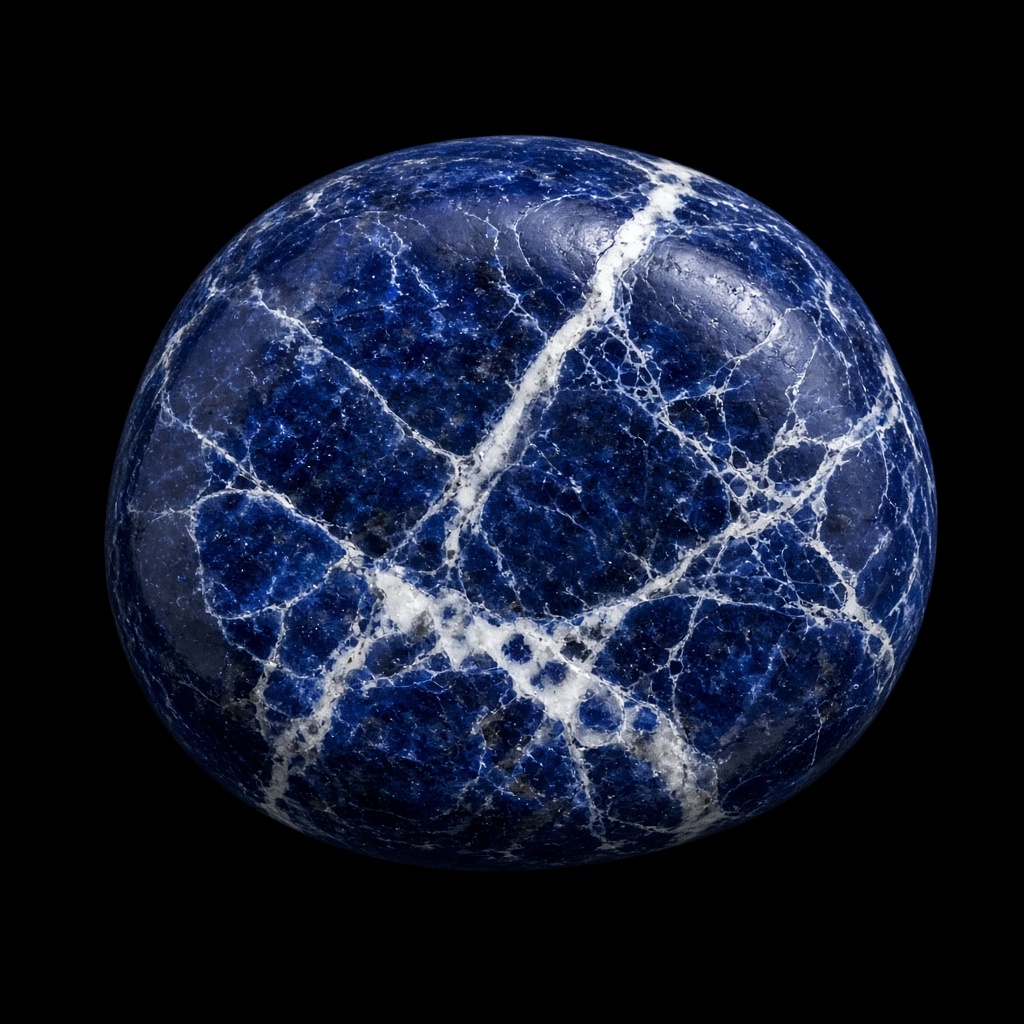
Sodalite is an opaque royal-blue feldspathoid with white calcite veining, Mohs 5.5–6. Identify it by rich blue color cut by white veins, absence of lapis's golden pyrite flecks, greasy-to-vitreous luster, and frequent orange fluorescence under UV.
About Sodalite
Sodalite is an opaque royal-blue feldspathoid with white calcite veining, Mohs 5.5–6. Identify it by rich blue color cut by white veins, absence of lapis's golden pyrite flecks, greasy-to-vitreous luster, and frequent orange fluorescence under UV.
Sodalite is filed under minerals in the RockScan directory. Composition: Sodium aluminum silicate chloride. It forms via silica-undersaturated igneous rocks. Typical occurrence: Canada (Ontario), Brazil, Namibia, Russia. For the broader method, see how to identify rock types.
Sodalite properties
| Mohs hardness | 5.5–6 |
|---|---|
| Class | mineral |
| Scientific name | Na₈(Al₆Si₆O₂₄)Cl₂ |
| Color | Royal blue with white veins |
| Luster | Vitreous to greasy |
| Crystal system / texture | Cubic |
| Composition | Sodium aluminum silicate chloride |
| Formation | Silica-undersaturated igneous rocks |
| Occurrence | Canada (Ontario), Brazil, Namibia, Russia |
How to identify Sodalite
- Royal blue with white veins; no golden pyrite flecks.
- Mohs 5.5–6 — harder than dyed howlite, softer than quartz.
- Often fluoresces orange under UV; massive habit, no crystal faces.
Lookalikes to rule out
- Lapis lazuli: Lapis carries golden pyrite flecks and brighter blue patches; sodalite shows white calcite veining without pyrite.
- Dyed howlite: Dyed howlite has gray spiderweb veining and Mohs ~3.5 softness; sodalite veins are white with Mohs 5.5–6.
- Azurite: Azurite is deeper azure with vitreous sparkle and malachite rims; sodalite is flatter royal blue and opaque.
Photo tips for Sodalite ID
- Show white calcite veining against royal blue — the vein pattern is the diagnostic photo.
- Test orange fluorescence under UV when possible; many sodalites glow.
- Photograph beside lapis when possible; pyrite flecks vs white veins decide instantly.
Snap one specimen in natural light, then open the result in the online studio or the rock identifier app.
Sodalite FAQ
How do you identify sodalite?
Look for opaque royal blue with white veining and no pyrite. Lapis has pyrite flecks; dyed howlite is softer with gray veins.
Sodalite vs lapis?
Lapis shows pyrite gold plus brighter blue zones; sodalite shows white veins only and often fluoresces orange.
Does sodalite glow under UV?
Often yes — many sodalites fluoresce orange, and the tenebrescent hackmanite variety shifts color in light.
How to identify sodalite
Blue beads and carvings labeled lapis are frequently sodalite. Veins plus hardness expose the swap:
- White veins: calcite veining through royal blue — gray spiderweb veins point to dyed howlite instead.
- No pyrite: absence of golden flecks separates sodalite from lapis lazuli.
- Hardness 5.5–6: a knife barely marks it; howlite (~3.5) scratches far more easily.
- UV check: orange fluorescence supports sodalite where lapis stays dark.
- Photo confirm: vein-pattern macros beside a hardness note, then RockScan against lapis and azurite.
Sodalite vs lapis vs dyed howlite vs azurite
- Lapis lazuli: brighter blue zones with pyrite gold; sodalite is vein-white without metal flecks.
- Dyed howlite: softer with gray veining and dyed-ink pooling in cracks.
- Azurite: deeper azure with vitreous sparkle and copper-green rims.
Photo tips for sodalite veins
Even light across polished faces shows vein networks best; add a UV shot when you can. Compare lapis lazuli, azurite, and calcite guides, then confirm in the online studio or rock identifier app.
Related minerals to compare
Browse all: rocks · minerals · crystals · directory · what rock is this · rock vs mineral vs crystal. Confirm with the online studio or rock identifier app.