Rock guide
How to Identify Pegmatite
Very coarse felsic intrusive rock
Pegmatite is a very coarse-grained igneous rock, usually granitic, with interlocking crystals centimeters to meters across. Identify it by giant feldspar, quartz, and mica books, graphic intergrowth textures, and zoned dikes that can host tourmaline, beryl, and spodumene gems.
About Pegmatite
Pegmatite is a very coarse-grained igneous rock, usually granitic, with interlocking crystals centimeters to meters across. Identify it by giant feldspar, quartz, and mica books, graphic intergrowth textures, and zoned dikes that can host tourmaline, beryl, and spodumene gems.
Pegmatite is filed under rocks in the RockScan directory. Composition: K-feldspar + quartz + mica ± tourmaline/beryl/garnet. It forms via water-rich residual granitic melt crystallizing in dikes. Typical occurrence: Granite terrains worldwide; famous gem districts in Brazil, Afghanistan, USA. For the broader method, see how to identify rock types.
Pegmatite properties
| Mohs hardness | 6–7 (aggregate) |
|---|---|
| Class | rock |
| Scientific name | Very coarse felsic intrusive rock |
| Color | Pink-white-gray with black mica books |
| Luster | Vitreous feldspar/quartz with pearly mica |
| Crystal system / texture | Giant phaneritic aggregate, often zoned |
| Composition | K-feldspar + quartz + mica ± tourmaline/beryl/garnet |
| Formation | Water-rich residual granitic melt crystallizing in dikes |
| Occurrence | Granite terrains worldwide; famous gem districts in Brazil, Afghanistan, USA |
How to identify Pegmatite
- Oversized interlocking crystals (cm+) — far coarser than granite.
- Granitic mineralogy: blocky feldspar, glassy quartz, mica books.
- Zoned dike bodies; gemmy pockets may hold tourmaline or beryl.
Lookalikes to rule out
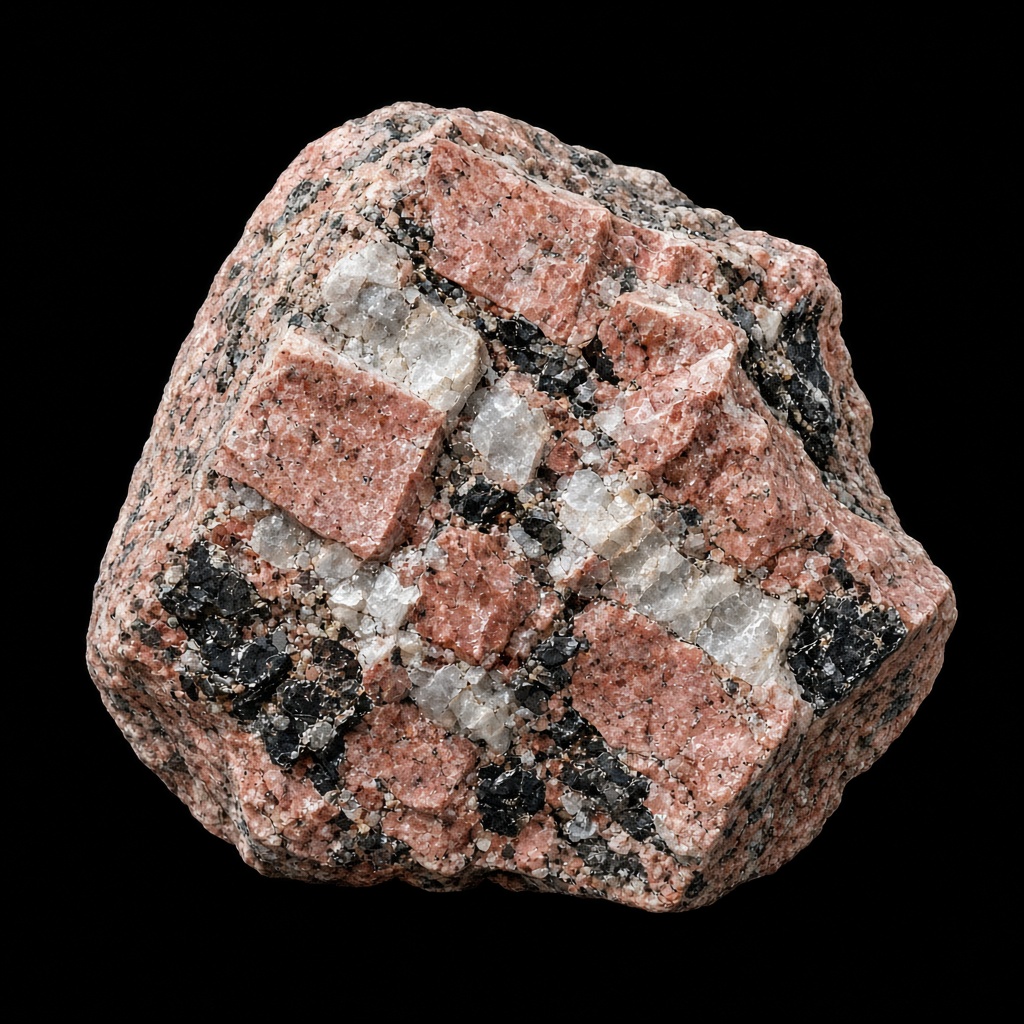
- Granite: Granite crystals measure millimeters; pegmatite crystals run centimeters to meters with graphic intergrowths.
- Aplite: Aplite is the sugary fine-grained dike edge; pegmatite is the giant-crystal core of the same system.
- Gneiss: Gneiss shows metamorphic banding; pegmatite is unbanded with oversized interlocking crystals.
Photo tips for Pegmatite ID
- Put a ruler or coin in frame — giant crystal size is the entire diagnosis.
- Shoot graphic quartz-feldspar intergrowths and mica books close up.
- Capture zoned pockets when visible; gem tourmaline and beryl live in pegmatite cores.
Snap one specimen in natural light, then open the result in the online studio or the rock identifier app.
Pegmatite FAQ
How do you identify pegmatite rock?
Look for giant interlocking feldspar-quartz-mica crystals with graphic textures. Granite is the same minerals at millimeter scale.
Why do collectors care about pegmatite?
Zoned pegmatites concentrate rare elements — they host tourmaline, aquamarine, spodumene, and topaz gem pockets.
Pegmatite vs granite?
Same granitic minerals, wildly different grain size: pegmatite crystals are centimeters-plus; granite crystals are millimeters.
How to identify pegmatite rock
Beginners confuse pegmatite with ordinary granite until they see the scale. If crystals dwarf a coin, work this checklist:
- Giant grain: individual crystals centimeters to meters — granite never reaches this scale.
- Granitic trio: blocky pink-white feldspar, glassy gray quartz, and flaky mica books interlocked.
- Graphic texture: rune-like quartz-feldspar intergrowths mark classic pegmatite zones.
- Zoning: wall, intermediate, and pocket zones; gem minerals cluster in the core.
- Photo confirm: ruler-scale wide shot plus intergrowth macro, then RockScan against granite and gneiss.
Pegmatite vs granite vs aplite vs gneiss
- Granite: same minerals at millimeter grain — pegmatite is the giant-crystal extreme.
- Aplite: sugary fine-grained bands, often edging the same dike as coarse pegmatite.
- Gneiss: banded metamorphic layering; pegmatite shows no foliation.
Photo tips for pegmatite dikes
Scale is everything — ruler in every frame, plus macros of graphic intergrowths and any gemmy pockets. Compare granite, tourmaline, and aquamarine guides, then confirm in the online studio or rock identifier app.
Related rocks to compare
Browse all: rocks · minerals · crystals · directory · what rock is this · rock vs mineral vs crystal. Confirm with the online studio or rock identifier app.