Crystal & mineral guide
Labradorite
Plagioclase feldspar
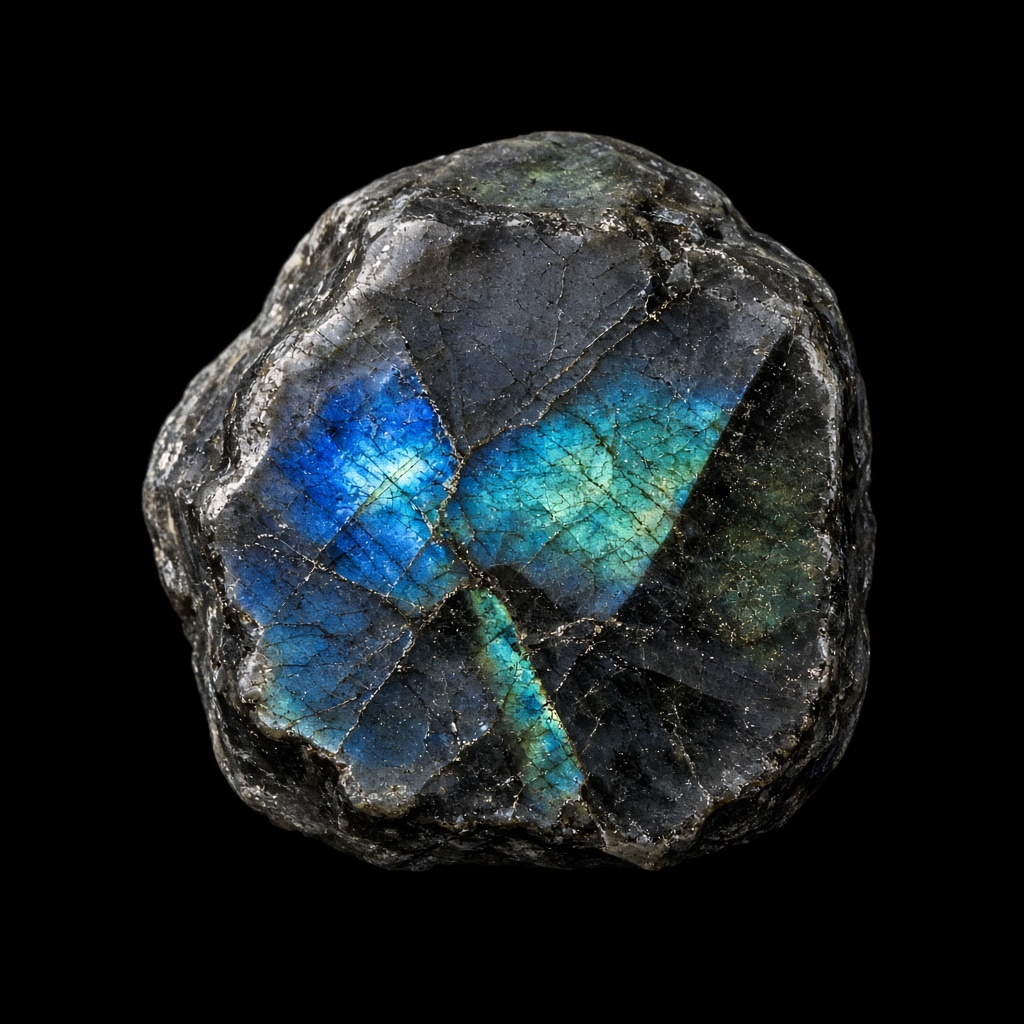
Feldspar famous for labradorescence — an inner spectral flash.
Identify Labradorite with RockScanAbout Labradorite
Interference from twinning lamellae creates the signature flash. Spectrolite from Finland shows full-spectrum color. Widely used in cabochons; cleavage requires careful cutting.
Labradorite belongs in a crystal identifier workflow because photo cues — color zoning, crystal habit, and surface luster — combine with measurable traits like Mohs 6–6.5 and specific gravity 2.68–2.72. Use RockScan’s camera to get a first-pass ID, then confirm with the checklist below.
Labradorite properties
| Mohs hardness | 6–6.5 |
|---|---|
| Crystal system | Triclinic |
| Luster | Vitreous |
| Color | Gray base with spectral schiller |
| Composition | Calcium-sodium aluminum silicate |
| Formation | Mafic igneous rocks |
| Occurrence | Canada (Labrador), Madagascar, Finland (spectrolite) |
| Specific gravity | 2.68–2.72 |
| Cleavage | Perfect |
How to identify Labradorite
- Schiller moves with viewing angle
- Feldspar cleavage
- Usually opaque to translucent gray body
Collector notes
- Named for the Labrador peninsula
- Inuit legend ties the flash to trapped northern lights
Value context: Broad, bright multi-color flash raises cabochon prices.
Labradorite FAQ
How do you identify Labradorite?
Labradorite (Plagioclase feldspar) is typically recognized by gray base with spectral schiller color, vitreous luster, Mohs hardness 6–6.5, and triclinic crystal system. RockScan can suggest Labradorite from a photo and surface these checks on the result card.
What is Labradorite made of?
Labradorite composition: Calcium-sodium aluminum silicate. It forms via mafic igneous rocks and is found in Canada (Labrador), Madagascar, Finland (spectrolite).
Is Labradorite valuable?
Broad, bright multi-color flash raises cabochon prices.