Crystal & mineral guide
Citrine
SiO₂ (Quartz)
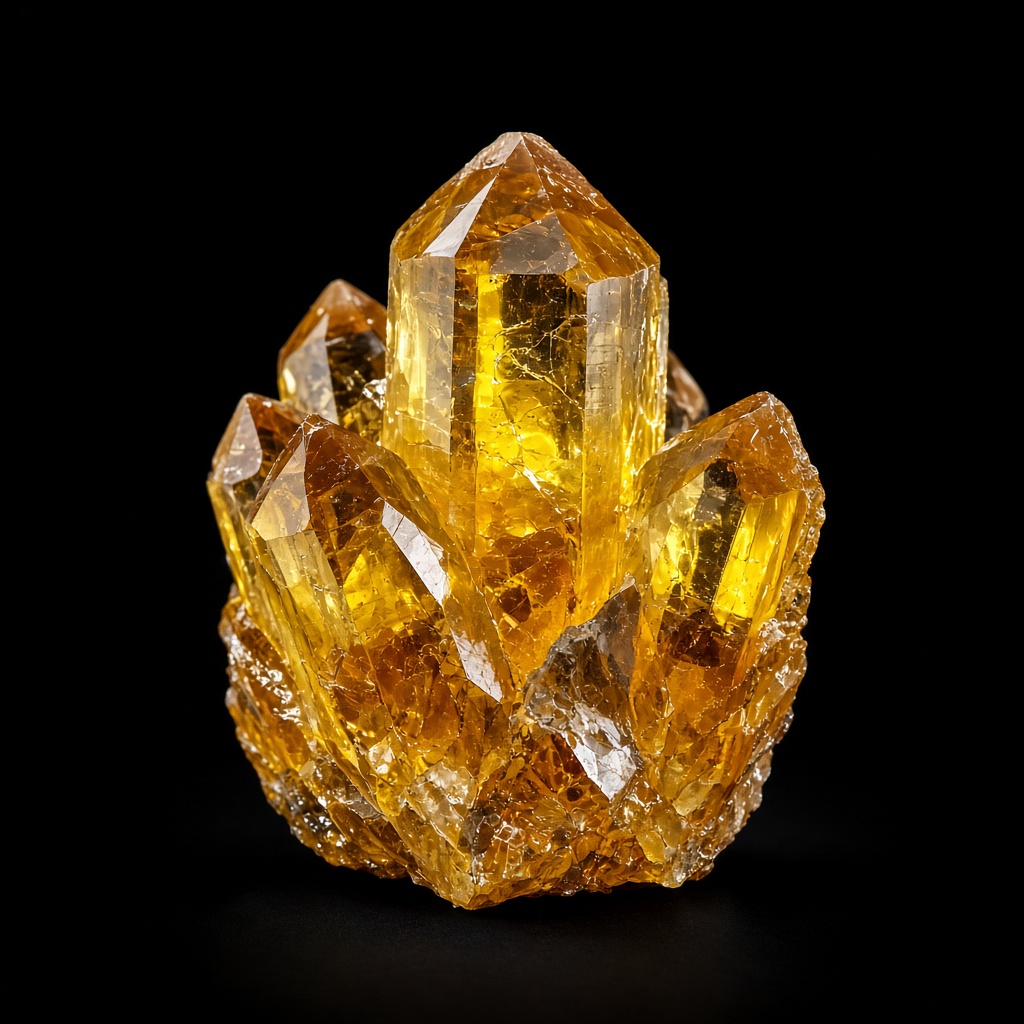
Golden quartz — much market material is heated amethyst; disclose treatment.
Identify Citrine with RockScanAbout Citrine
Natural citrine is uncommon; the fiery orange 'Madeira' look in shops is typically heated amethyst or smoky quartz. Crystal habit matches quartz: hexagonal prisms. Color should be transparent with vitreous luster, not cloudy dyed glass.
Citrine belongs in a crystal identifier workflow because photo cues — color zoning, crystal habit, and surface luster — combine with measurable traits like Mohs 7 and specific gravity 2.65. Use RockScan’s camera to get a first-pass ID, then confirm with the checklist below.
Citrine properties
| Mohs hardness | 7 |
|---|---|
| Crystal system | Trigonal |
| Luster | Vitreous |
| Color | Pale yellow to Madeira orange |
| Composition | Silicon dioxide with iron color centers |
| Formation | Natural rare; most commercial citrine is heat-treated amethyst |
| Occurrence | Brazil, Madagascar, Spain (natural rarer) |
| Specific gravity | 2.65 |
| Cleavage | None |
How to identify Citrine
- Quartz crystal habit and hardness 7
- Natural stones often pale; vivid orange may be treated
- No dichroism like some yellow sapphires
Collector notes
- Name from Latin 'citrina' — lemon-colored
- Natural citrine deposits are far scarcer than heated supply
Value context: Disclose heat treatment; natural citrine is scarcer and priced higher.
Citrine FAQ
How do you identify Citrine?
Citrine (SiO₂ (Quartz)) is typically recognized by pale yellow to madeira orange color, vitreous luster, Mohs hardness 7, and trigonal crystal system. RockScan can suggest Citrine from a photo and surface these checks on the result card.
What is Citrine made of?
Citrine composition: Silicon dioxide with iron color centers. It forms via natural rare; most commercial citrine is heat-treated amethyst and is found in Brazil, Madagascar, Spain (natural rarer).
Is Citrine valuable?
Disclose heat treatment; natural citrine is scarcer and priced higher.