Crystal & mineral guide
Opal
SiO₂·nH₂O
October birthstone famous for spectral play-of-color.
Identify Opal with RockScanAbout Opal
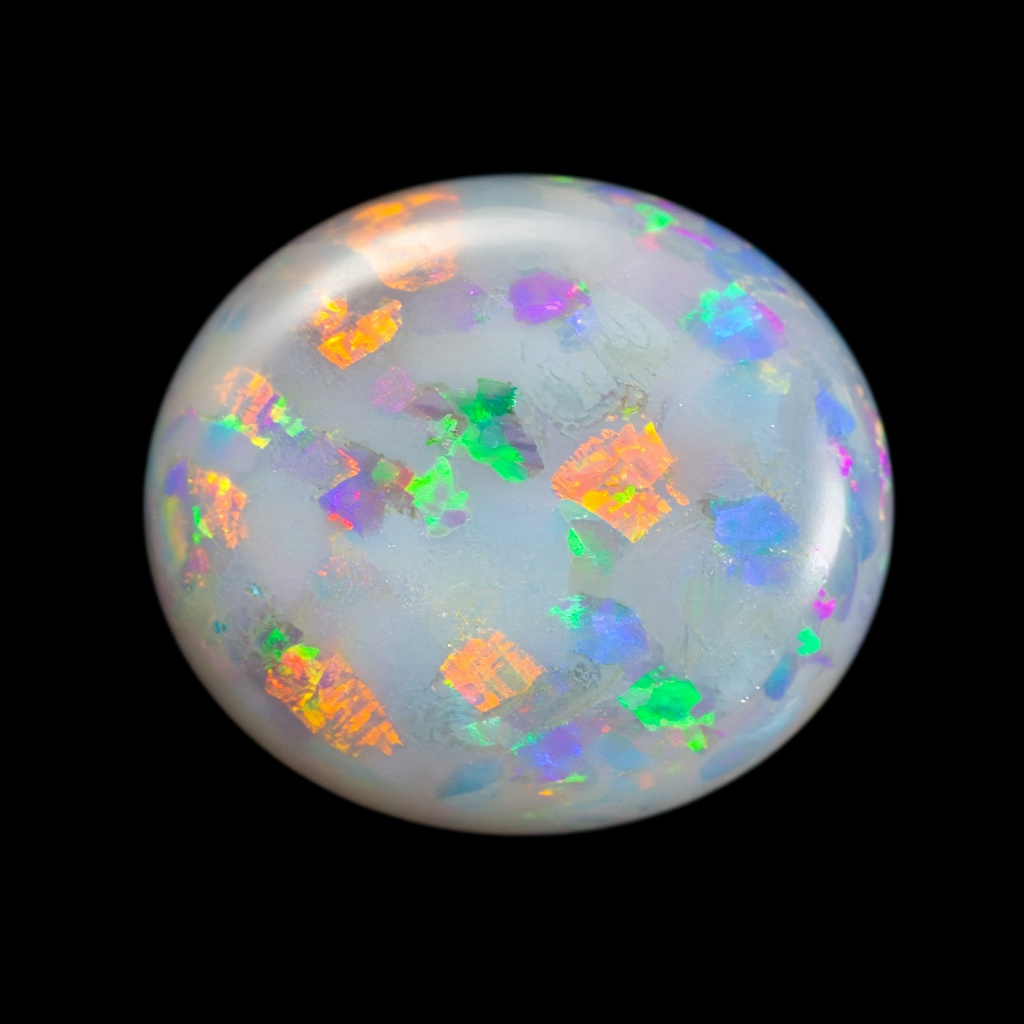
Precious opal diffracts light from stacked silica spheres. Black opal from Lightning Ridge is most valued; Ethiopian hydrophane opal can absorb water and change appearance. Opals are sensitive to drying and knocks — advise clients on care.
Opal belongs in a crystal identifier workflow because photo cues — color zoning, crystal habit, and surface luster — combine with measurable traits like Mohs 5–6.5 and specific gravity 1.98–2.25. Use RockScan’s camera to get a first-pass ID, then confirm with the checklist below.
Opal properties
| Mohs hardness | 5–6.5 |
|---|---|
| Crystal system | Amorphous |
| Luster | Vitreous to waxy |
| Color | Body color + spectral play-of-color |
| Composition | Hydrated silica spheres |
| Formation | Silica-rich sedimentary and volcanic settings |
| Occurrence | Australia, Ethiopia, Mexico, USA |
| Specific gravity | 1.98–2.25 |
| Cleavage | None |
How to identify Opal
- Play-of-color unique among gems
- Lower SG than quartz
- Avoid ultrasonic cleaners
Collector notes
- Ancient Romans prized opal as a supreme gem
- Synthetics and imitations exist — learn pattern differences
Value context: Brightness, pattern, and body tone drive price; black crystal opal leads.
Opal FAQ
How do you identify Opal?
Opal (SiO₂·nH₂O) is typically recognized by body color + spectral play-of-color color, vitreous to waxy luster, Mohs hardness 5–6.5, and amorphous crystal system. RockScan can suggest Opal from a photo and surface these checks on the result card.
What is Opal made of?
Opal composition: Hydrated silica spheres. It forms via silica-rich sedimentary and volcanic settings and is found in Australia, Ethiopia, Mexico, USA.
Is Opal valuable?
Brightness, pattern, and body tone drive price; black crystal opal leads.