Mineral guide
How to Identify Quartz
SiO₂
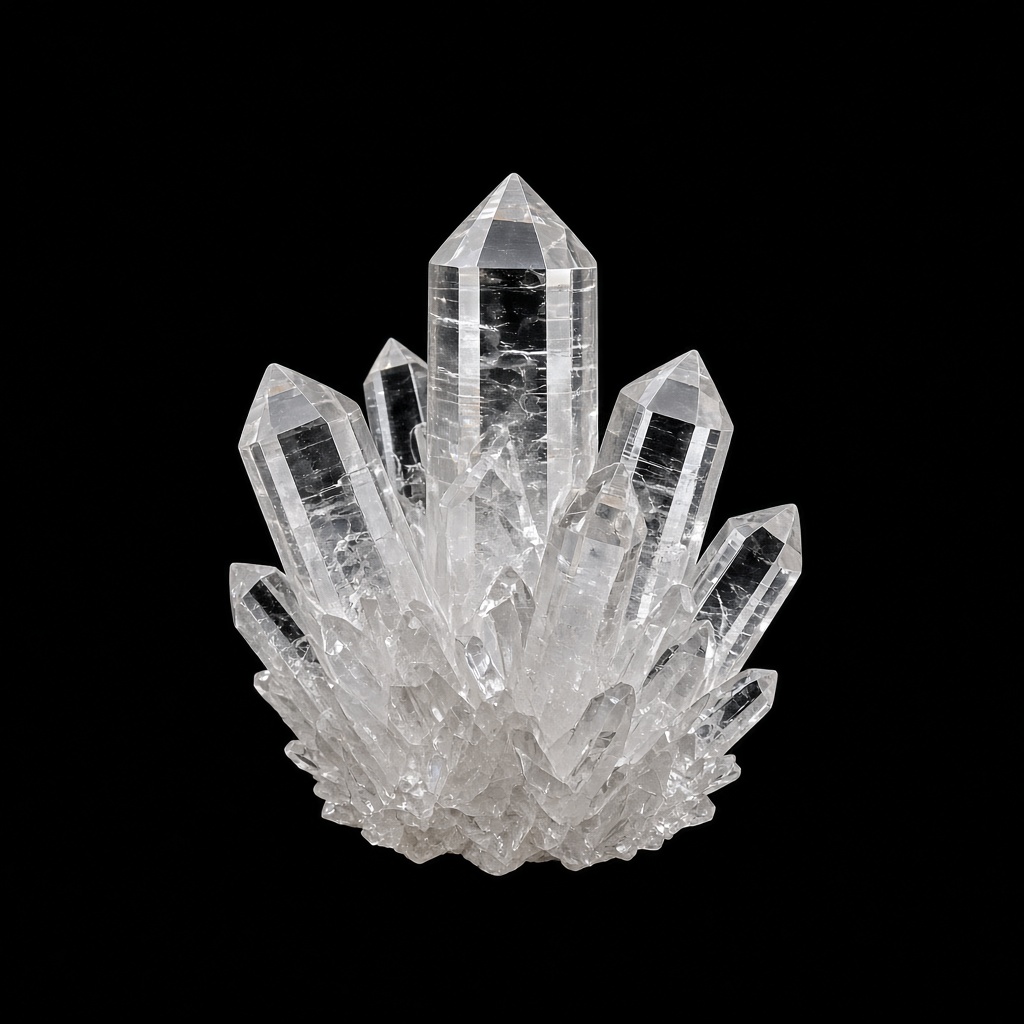
Quartz is silicon dioxide (SiO₂), one of Earth’s most common minerals. Clear rock crystal, milky, and smoky varieties share Mohs 7 hardness, vitreous luster, and often hexagonal prism habits — the baseline silica standard for field ID.
About Quartz
Quartz is silicon dioxide (SiO₂), one of Earth’s most common minerals. Clear rock crystal, milky, and smoky varieties share Mohs 7 hardness, vitreous luster, and often hexagonal prism habits — the baseline silica standard for field ID.
Quartz is filed under minerals in the RockScan directory. Composition: Silicon dioxide. It forms via hydrothermal veins, pegmatites, geodes. Typical occurrence: Worldwide. For the broader method, see how to identify rock types.
Quartz properties
| Mohs hardness | 7 |
|---|---|
| Class | mineral |
| Scientific name | SiO₂ |
| Color | Colorless |
| Luster | Vitreous |
| Crystal system / texture | Trigonal |
| Composition | Silicon dioxide |
| Formation | Hydrothermal veins, pegmatites, geodes |
| Occurrence | Worldwide |
How to identify Quartz
- Mohs 7; scratches glass.
- Vitreous; conchoidal fracture.
- Hexagonal prisms common in crystals.
Lookalikes to rule out
- Glass: Glass may show bubbles and isotropic behavior; quartz is crystalline, often with hexagonal prism habits.
- Calcite: Calcite is Mohs 3 and fizzes; quartz is Mohs 7 and does not.
- Topaz: Topaz has perfect cleavage and different crystal habit; quartz has conchoidal fracture and no cleavage.
Photo tips for Quartz ID
- Show hexagonal prism + pyramid terminations when present.
- Capture vitreous luster without blown highlights.
- Include any color zoning (clear, smoky, milky).
Snap one specimen in natural light, then open the result in the online studio or the rock identifier app.
Quartz FAQ
How do you identify quartz?
Hardness 7, glassy luster, and often hexagonal crystals. It will not fizz with acid and lacks calcite’s softness.
Is quartz a rock or mineral?
Quartz is a mineral. Rocks like granite and sandstone contain quartz grains.
Quartz vs glass in a photo?
Crystal faces and lack of round bubbles help; RockScan suggests quartz then you confirm hardness and habit.
How to identify a quartz rock
When people ask “how do you identify a quartz rock,” they usually mean crystal points, vein chunks, or milky cobbles. This checklist separates quartz from glass and soft lookalikes:
- Hardness 7: scratches glass; calcite (3) and gypsum (2) fail immediately.
- Luster & fracture: vitreous shine with conchoidal fracture on broken faces.
- Habit: hexagonal prisms with pyramid terminations when crystal faces grew freely.
- No bubbles: true quartz is crystalline — glass may show trapped bubbles or mold lines.
- Photo confirm: capture prism + termination, then RockScan against topaz, calcite, and glass.
Quartz vs glass vs calcite vs topaz
- Glass: Softer, may show bubbles or molded seams; quartz is Mohs 7 crystalline silica.
- Calcite: Mohs 3, perfect rhombohedral cleavage, acid fizz — quartz does none of that.
- Topaz: Harder (~8) with perfect cleavage; quartz lacks topaz’s cleavage and is more common in veins.
Photo tips for quartz ID
Show hexagonal prism and pyramid tips when present; keep vitreous highlights from blowing out. Include color variety cues (clear, milky, smoky). Cross-link amethyst, clear quartz, and gypsum, then confirm in the online studio or rock identifier app.
Related minerals to compare
Browse all: rocks · minerals · crystals · directory · what rock is this · rock vs mineral vs crystal. Confirm with the online studio or rock identifier app.