Rock guide
How to Identify Shale
Fissile mudrock
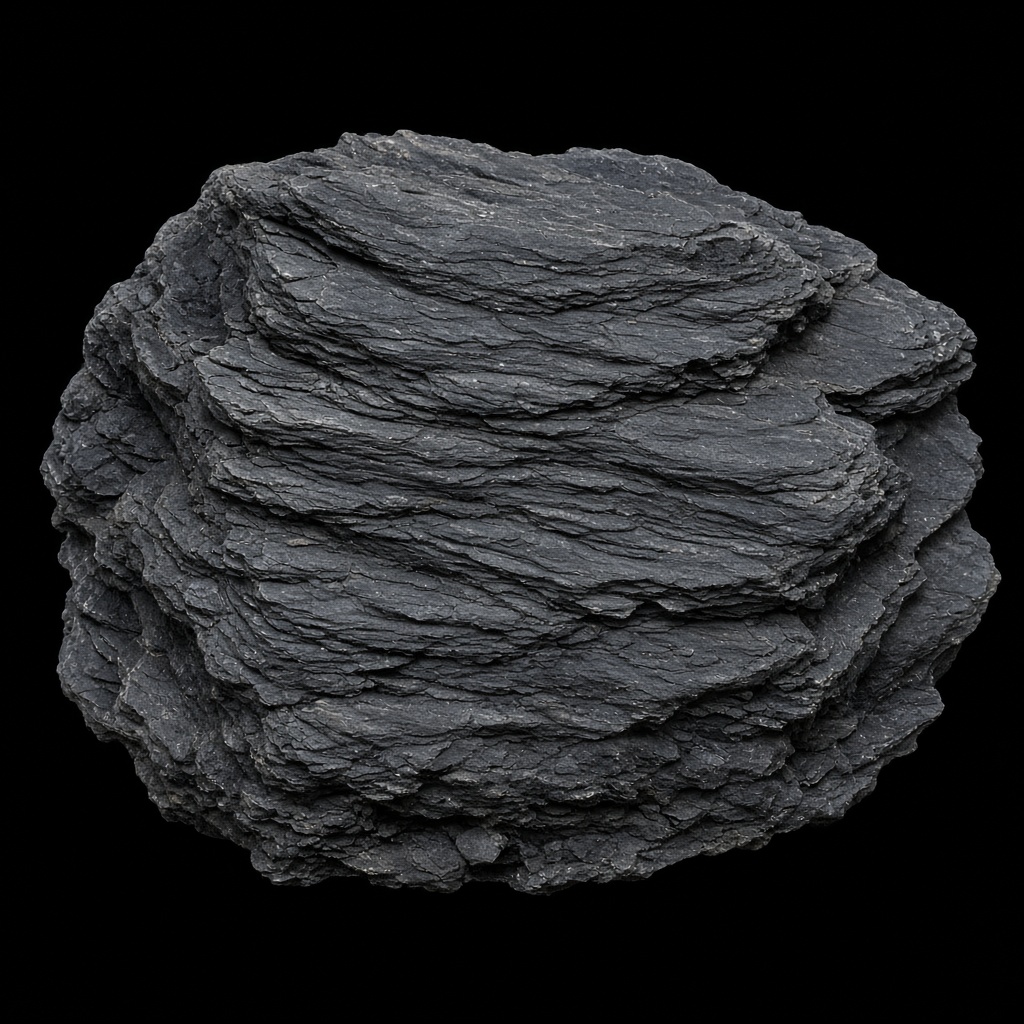
Shale is a soft, fine-grained sedimentary mudrock that peels into thin fissile layers. Identify it by Mohs ~1–3 softness, papery layering, and an earthy dull feel — not hard metamorphic slate sheets.
About Shale
Shale is a soft, fine-grained sedimentary mudrock that peels into thin fissile layers. Identify it by Mohs ~1–3 softness, papery layering, and an earthy dull feel — not hard metamorphic slate sheets.
Shale is filed under rocks in the RockScan directory. Composition: Clay minerals + silt. It forms via compaction of mud in quiet water. Typical occurrence: Worldwide sedimentary basins. For the broader method, see how to identify rock types.
Shale properties
| Mohs hardness | 1–3 (aggregate) |
|---|---|
| Class | rock |
| Scientific name | Fissile mudrock |
| Color | Gray, black, red, green |
| Luster | Dull |
| Crystal system / texture | Clastic aggregate |
| Composition | Clay minerals + silt |
| Formation | Compaction of mud in quiet water |
| Occurrence | Worldwide sedimentary basins |
How to identify Shale
- Soft; fingernail or knife often marks it.
- Fissile thin layers.
- Earthy dull luster; may smell muddy when wet.
Lookalikes to rule out
- Slate: Slate is harder metamorphic; shale is soft and often crumbly.
- Mudstone: Mudstone lacks strong fissility; shale splits into thin papery layers.
- Siltstone: Siltstone feels slightly gritty; shale feels smoother/muddy.
Photo tips for Shale ID
- Show thin fissile layers peeling apart.
- Close-up of dull earthy surface — avoid implying polish.
- Scale with a finger; shale pieces are often thin and fragile.
Snap one specimen in natural light, then open the result in the online studio or the rock identifier app.
Shale FAQ
How do you identify shale?
Soft, dull, fine-grained rock that splits into thin layers. Much softer than slate.
Does shale contain fossils?
Sometimes — fine mud can preserve fossils. Presence of fossils supports a sedimentary ID but is not required.
Shale vs slate for collectors?
Slate is metamorphosed and more durable; shale is the softer sedimentary precursor.
How to identify shale rock
Collectors search “how to identify shale rock” when a soft layered mudstone might be slate or siltstone. Use this field checklist:
- Softness: fingernail or knife often marks it (Mohs ~1–3) — much softer than slate or sandstone grit.
- Fissility: peels into thin papery layers; mudstone without strong fissility is a different label.
- Earthy feel: dull luster; may smell muddy when damp — sedimentary mudrock, not metamorphic sheets.
- Color cues: grey, black, red, or green from organics and iron — color alone is not diagnostic.
- Photo first: show thin layers peeling apart, then confirm with RockScan against slate and sandstone.
Shale vs slate vs mudstone vs siltstone
- Slate: Harder metamorphic sheets that ring and resist crumbling; shale is soft sedimentary mudrock.
- Mudstone: Lacks strong fissility; shale splits into thin papery layers.
- Siltstone: Slightly gritty silt feel; shale feels smoother and muddier.
Photo tips for shale ID
Macro of fissile layers peeling, a finger scale shot, and a dull earthy face — avoid implying polish. Compare slate, sandstone, and limestone, then confirm in the online studio or rock identifier app.
Related rocks to compare
Browse all: rocks · minerals · crystals · directory · what rock is this · rock vs mineral vs crystal. Confirm with the online studio or rock identifier app.