Rock guide
How to Identify Fossil rock
Fossiliferous sedimentary rock
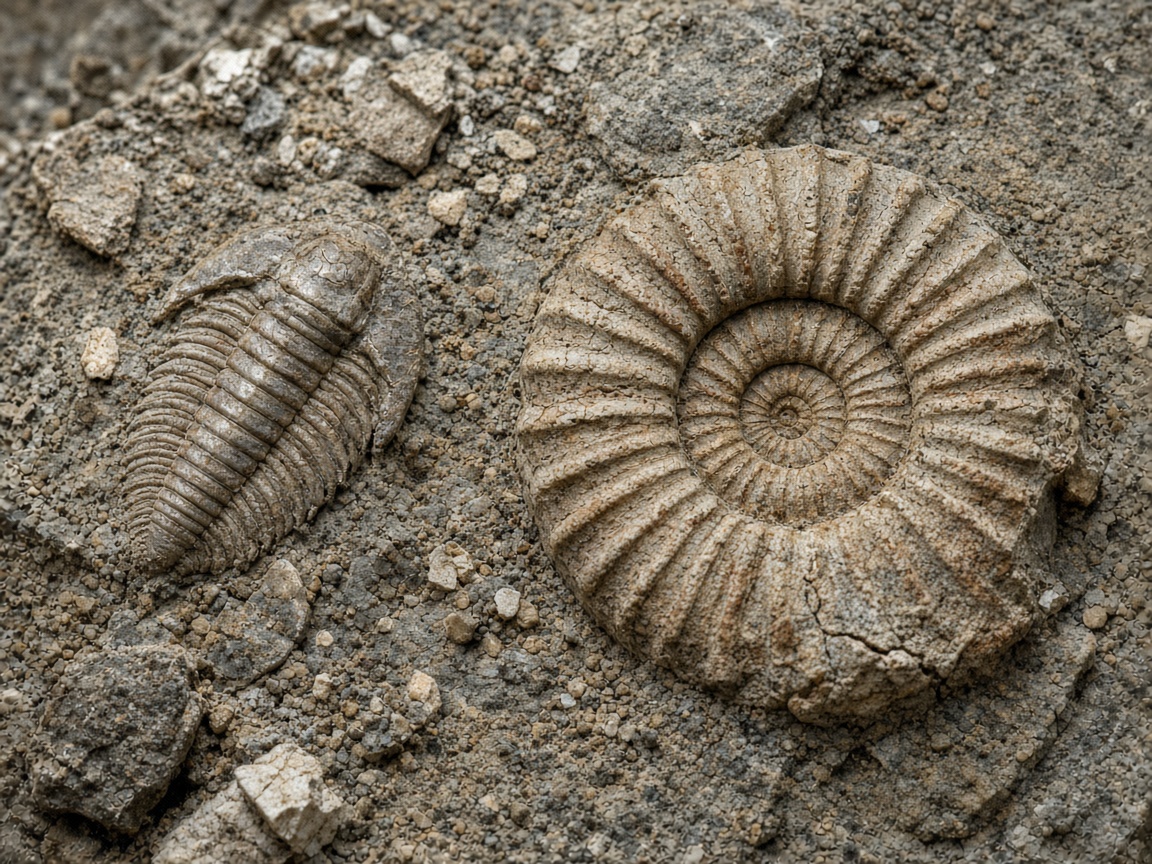
Fossil rock is sedimentary rock that preserves organism remains or traces — shells, bone, wood, or impressions — as mineralized shapes in stone. Identification starts with biological morphology in a sedimentary host, not with crystal habit alone.
About Fossil rock
Fossil rock is sedimentary rock that preserves organism remains or traces — shells, bone, wood, or impressions — as mineralized shapes in stone. Identification starts with biological morphology in a sedimentary host, not with crystal habit alone.
Fossil rock is filed under rocks in the RockScan directory. Composition: Host sediment + original or replaced fossil material. It forms via burial and mineralization of organisms/traces. Typical occurrence: Sedimentary basins worldwide. For the broader method, see how to identify rock types.
Fossil rock properties
| Mohs hardness | Variable (host + replacement) |
|---|---|
| Class | rock |
| Scientific name | Fossiliferous sedimentary rock |
| Color | Depends on host and minerals |
| Luster | Variable |
| Crystal system / texture | n/a (rock + fossil) |
| Composition | Host sediment + original or replaced fossil material |
| Formation | Burial and mineralization of organisms/traces |
| Occurrence | Sedimentary basins worldwide |
How to identify Fossil rock
- Biological shapes: shells, segments, wood grain in stone.
- Host is typically sedimentary.
- Mineral replacement may preserve detail in silica, calcite, or pyrite.
Lookalikes to rule out
- Concrete with shells: Concrete matrix looks artificial; natural fossil rock shows geologic bedding and mineral replacement.
- Dendritic manganese on limestone: Dendrites are mineral branching films, not organism morphology.
- Casts vs molds ambiguity: Learn mold (impression) vs cast (infill) — both are fossils but photo cues differ.
Photo tips for Fossil rock ID
- Shoot perpendicular to the fossil surface; raking light reveals relief.
- Include a scale bar or coin for shell/segment size.
- If ammonite/trilobite patterns exist, fill the frame with the diagnostic morphology.
Snap one specimen in natural light, then open the result in the online studio or the rock identifier app.
Fossil rock FAQ
How do you identify a fossil rock?
Look for organism shapes or traces locked in sedimentary rock. Raking light helps. Photo ID can flag fossiliferous specimens; morphology confirms.
Are fossils minerals?
Fossils are preserved remains/traces; the replacing minerals (calcite, silica, pyrite) are the mineral part.
Common beginner fossils?
Ammonites, trilobites, shell hash in limestone, and petrified wood are frequent outdoor and dealer finds.
How to identify a fossil rock
People search “how to identify a fossil rock” when a cobble shows shell shapes, segments, or wood grain. Run this checklist before calling a random pattern a fossil:
- Biology first: look for organism morphology — spiral shells, ribs, segments, leaf veins, or wood grain — not random mineral stains.
- Sedimentary host: limestone, shale, sandstone, or mudstone matrices are typical; igneous glass rarely hosts true fossils.
- Relief & symmetry: raking light reveals raised ribs, suture lines, or bilateral symmetry that mineral dendrites lack.
- Replacement clues: silica, calcite, or pyrite can replace soft tissue while keeping shape — detail can be high even when color is dull.
- Photo + scale: shoot perpendicular and edge-on with a coin for size, then confirm with RockScan before cleaning abrasively.
Fossil rock vs common lookalikes
- Concrete with shells: Artificial matrix, rebar stains, or modern cement texture give concrete away; natural fossil rock shows geologic bedding.
- Dendritic manganese: Branching black films on limestone look plant-like but are mineral growths without organism anatomy.
- Casts vs molds: Both can be real fossils — a mold is the imprint; a cast fills it. Either still needs biological shape to count.
Photo tips before you clean a fossil
Raking light for relief, one scale shot, and a wet/dry pair on the fossil face. Fill the frame with diagnostic morphology (ammonite coils, trilobite segments). Cross-check limestone hosts and compare patterned interiors like geodes, then open the online studio or rock identifier app.
Related rocks to compare
Browse all: rocks · minerals · crystals · directory · what rock is this · rock vs mineral vs crystal. Confirm with the online studio or rock identifier app.