Mineral guide
How to Identify Jade
Nephrite / Jadeite
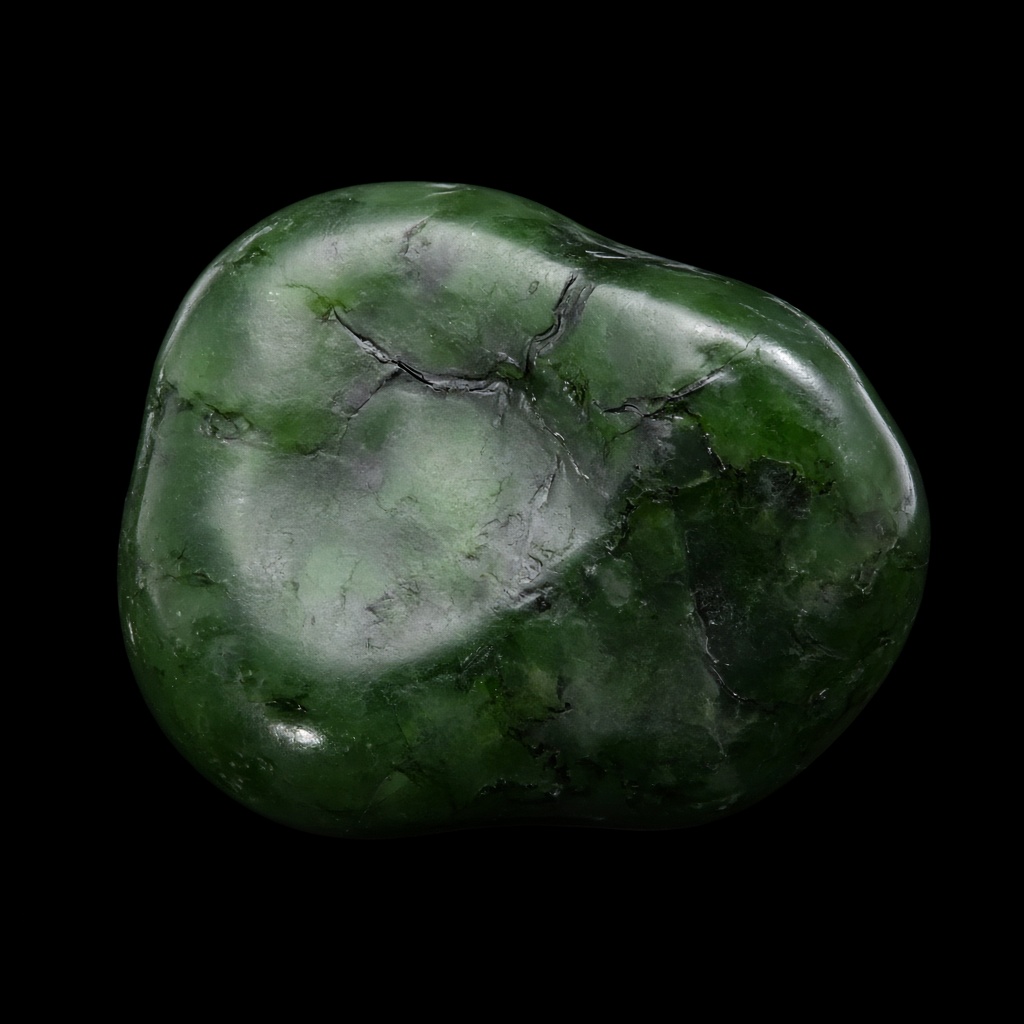
Jade means tough nephrite or jadeite aggregates prized for carving. Identify jade by toughness and dense interlocking texture (Mohs ~6–7), not color alone — many green stones sold as jade are serpentine or glass.
About Jade
Jade means tough nephrite or jadeite aggregates prized for carving. Identify jade by toughness and dense interlocking texture (Mohs ~6–7), not color alone — many green stones sold as jade are serpentine or glass.
Jade is filed under minerals in the RockScan directory. Composition: Nephrite (amphibole) or jadeite (pyroxene). It forms via metamorphic environments with specific chemistries. Typical occurrence: Myanmar (jadeite), China/New Zealand (nephrite), Guatemala. For the broader method, see how to identify rock types.
Jade properties
| Mohs hardness | 6–7 |
|---|---|
| Class | mineral |
| Scientific name | Nephrite / Jadeite |
| Color | Green classic; also lavender, white |
| Luster | Greasy to vitreous |
| Crystal system / texture | Monoclinic (both) |
| Composition | Nephrite (amphibole) or jadeite (pyroxene) |
| Formation | Metamorphic environments with specific chemistries |
| Occurrence | Myanmar (jadeite), China/New Zealand (nephrite), Guatemala |
How to identify Jade
- Tough interlocking feel; resists chipping vs many lookalikes.
- Mohs ~6–7; greasy to vitreous polish.
- Translucency on thin edges for better pieces.
Lookalikes to rule out
- Serpentine (false jade): Serpentine is usually softer and greasier; true jade is tougher.
- Aventurine quartz: Aventurine shows sparkly mica; jade is smoother tough aggregate.
- Glass: Glass can be too transparent with bubbles; jade is typically aggregate and tougher.
Photo tips for Jade ID
- Diffuse light for translucency on thin edges.
- Show carved polish if present — toughness cue.
- Color alone misleads; include texture.
Snap one specimen in natural light, then open the result in the online studio or the rock identifier app.
Jade FAQ
How do you identify jade?
Focus on toughness and aggregate texture, not color. Many green stones are sold as jade incorrectly.
Nephrite vs jadeite?
Both are jade; jadeite can be more vivid and is a different mineral (pyroxene) than nephrite (amphibole).
Is jade a crystal?
It is a mineral aggregate; crystals are microscopic. We list it for photo ID among minerals/gems collectors photograph.
How to identify jade rock
Ahrefs shows “how to identify jade rock” as an Easy/<100 how-to. Color misleads — use toughness and texture:
- Toughness first: true jade resists chipping better than many green lookalikes; serpentine feels greasier and softer.
- Hardness: Mohs ~6–7; glass may scratch differently and show mold lines or bubbles.
- Texture: dense interlocking aggregate; translucency on thin edges for better pieces.
- Color is weak: spinach green to lavender/white — green alone never proves jade.
- Photo first: diffuse light for edge translucency + polish cue, then RockScan vs serpentine and aventurine.
Jade vs serpentine vs aventurine vs glass
- Serpentine (false jade): softer, greasier feel; chips more readily than tough jade.
- Aventurine quartz: sparkly mica inclusions; jade is smoother tough aggregate without glitter.
- Glass: bubbles, mold lines, overly even transparency; jade is aggregate and tougher.
Photo tips for jade ID
Soft diffuse light on thin-edge translucency and any carved polish. Compare turquoise, jasper, and malachite, then confirm in the online studio or rock identifier app.
Related minerals to compare
Browse all: rocks · minerals · crystals · directory · what rock is this · rock vs mineral vs crystal. Confirm with the online studio or rock identifier app.