Mineral guide
How to Identify Turquoise
CuAl₆(PO₄)₄(OH)₈·4H₂O
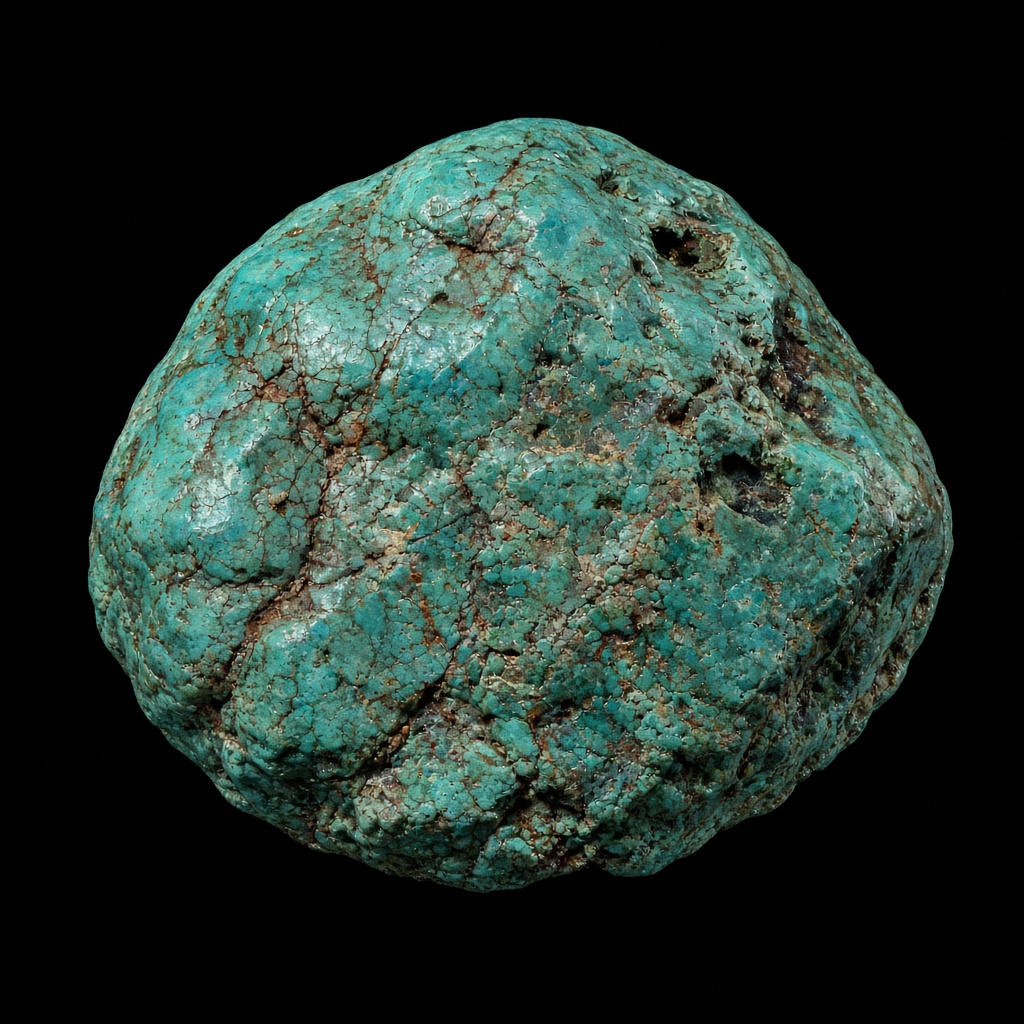
Turquoise is a blue-green copper phosphate mineral, often porous and matrix-veined. Identify it by color plus matrix patterns and Mohs ~5–6 — and always rule out dyed howlite and other blue-green fakes before trusting a label.
About Turquoise
Turquoise is a blue-green copper phosphate mineral, often porous and matrix-veined. Identify it by color plus matrix patterns and Mohs ~5–6 — and always rule out dyed howlite and other blue-green fakes before trusting a label.
Turquoise is filed under minerals in the RockScan directory. Composition: Hydrated copper aluminum phosphate. It forms via secondary mineral in arid copper-bearing rocks. Typical occurrence: Iran, USA (Southwest), China, Tibet. For the broader method, see how to identify rock types.
Turquoise properties
| Mohs hardness | 5–6 |
|---|---|
| Class | mineral |
| Scientific name | CuAl₆(PO₄)₄(OH)₈·4H₂O |
| Color | Sky blue to green-blue |
| Luster | Waxy to sub-vitreous |
| Crystal system / texture | Triclinic |
| Composition | Hydrated copper aluminum phosphate |
| Formation | Secondary mineral in arid copper-bearing rocks |
| Occurrence | Iran, USA (Southwest), China, Tibet |
How to identify Turquoise
- Opaque blue-green + matrix.
- Mohs ~5–6.
- Waxy to subvitreous; not glassy transparent.
Lookalikes to rule out
- Howlite (dyed): Dyed howlite has white matrix veins too regularly and is softer; turquoise has natural matrix patterns.
- Chrysocolla: Chrysocolla is often bluer/greener and softer crumbly; turquoise is denser opaque blue-green.
- Amazonite: Amazonite is feldspar with different texture and cleavage; not the classic turquoise matrix look.
Photo tips for Turquoise ID
- Show matrix webbing honestly — it is part of ID.
- Accurate blue-green white balance.
- Compare opacity; turquoise is typically opaque.
Snap one specimen in natural light, then open the result in the online studio or the rock identifier app.
Turquoise FAQ
How do you identify turquoise?
Opaque blue-green with natural matrix and Mohs ~5–6. Watch for dyed howlite imitations.
Does matrix mean fake?
No — matrix veins are common in natural turquoise.
Turquoise vs chrysocolla?
Chrysocolla is typically softer and more silicate-blue; turquoise is a phosphate with classic jewelry use.
How to identify turquoise
“How to identify turquoise rock” intent is mostly fake-detection. Use this checklist:
- Color + matrix: sky to robin’s-egg blue-green with natural spiderweb or host-rock matrix veins.
- Hardness: Mohs ~5–6; softer than quartz, harder than many dyed carbonates.
- Fake screen: dyed howlite often shows uniform white veins with unnatural dye pooling — compare carefully.
- Surface: natural pieces can look porous; heavy plastic sheen suggests resin composite.
- Photo first: macro of matrix veins in shade, then RockScan and the real-vs-fake turquoise guide if needed.
Turquoise vs dyed howlite vs chrysocolla vs amazonite
- Dyed howlite: soft white carbonate base with dye in cracks; unnatural even blue.
- Chrysocolla: often softer, more glassy/botryoidal silica-copper mix; different habit.
- Amazonite: feldspar green-blue without classic turquoise matrix web; different hardness/cleavage.
Photo tips for turquoise ID
Macro matrix veins without flash glare; include a dry color shot. Compare jade, malachite, and real vs fake turquoise, then confirm in the online studio or rock identifier app.
Related minerals to compare
Browse all: rocks · minerals · crystals · directory · what rock is this · rock vs mineral vs crystal. Confirm with the online studio or rock identifier app.