Crystal & mineral guide
Stilbite
NaCa₄(Si₂₇Al₉)O₇₂·28H₂O
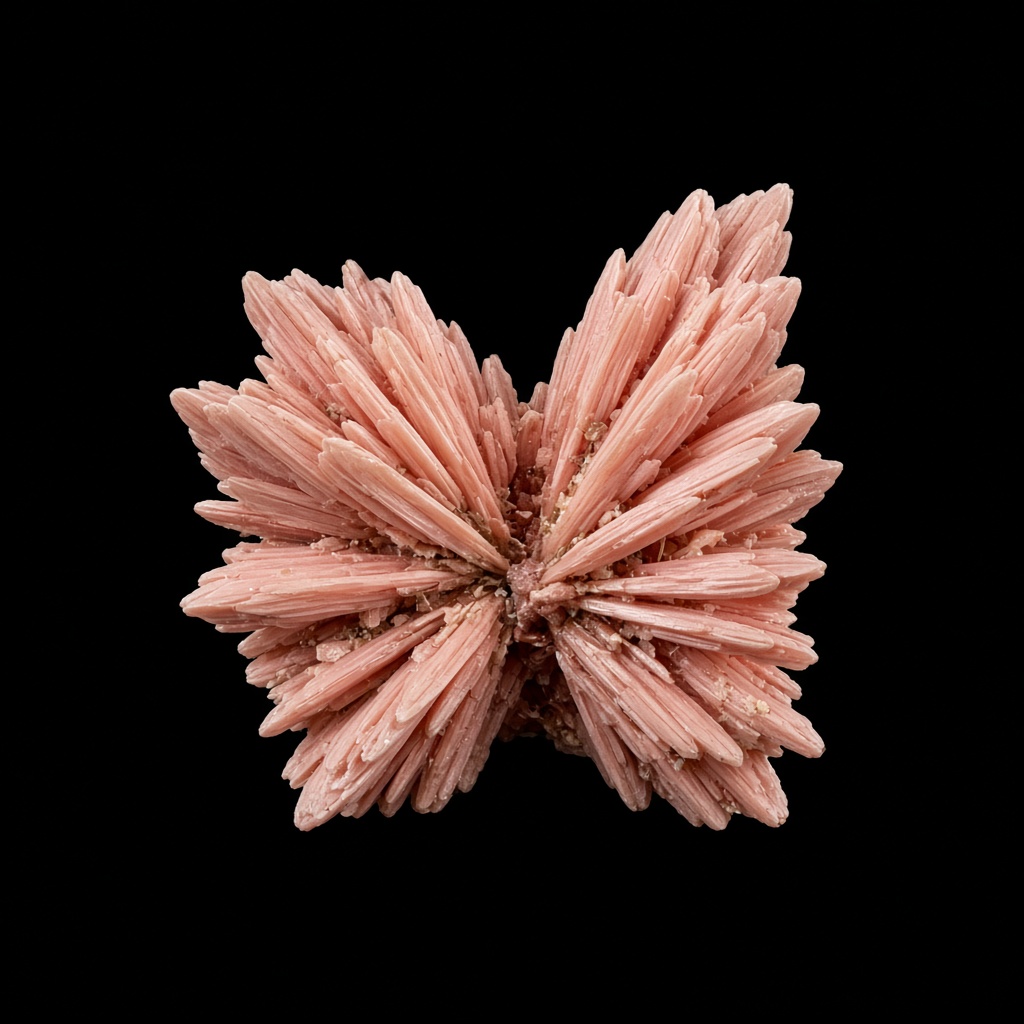
Sheaf-like zeolite crystals — peach stilbite from India is ubiquitous in trade.
Identify Stilbite with RockScanAbout Stilbite
Stilbite forms characteristic sheaf or bow-tie aggregates with pearly cleavage. Common with apophyllite in Deccan basalt geodes. Soft zeolite — decorative specimens, not jewelry. Industrial zeolites are related framework silicates used as molecular sieves.
Stilbite belongs in a crystal identifier workflow because photo cues — color zoning, crystal habit, and surface luster — combine with measurable traits like Mohs 3.5–4 and specific gravity 2.1–2.2. Use RockScan’s camera to get a first-pass ID, then confirm with the checklist below.
Stilbite properties
| Mohs hardness | 3.5–4 |
|---|---|
| Crystal system | Monoclinic |
| Luster | Vitreous to pearly |
| Color | White, peach, orange, brown |
| Composition | Hydrated sodium calcium aluminum silicate (zeolite) |
| Formation | Basalt and volcanic cavities |
| Occurrence | India, Iceland, USA, Scotland |
| Specific gravity | 2.1–2.2 |
| Cleavage | Perfect |
How to identify Stilbite
- Sheaf/bow-tie crystal clusters
- Pearly cleavage; soft
- Lightweight vs denser silicates
Collector notes
- Name from Greek 'stilbein' — to shine
- Indian peach stilbite is among the most common dealer zeolites
Value context: Aesthetic sheaves with apophyllite on matrix are standard collector pieces.
Stilbite FAQ
How do you identify Stilbite?
Stilbite (NaCa₄(Si₂₇Al₉)O₇₂·28H₂O) is typically recognized by white, peach, orange, brown color, vitreous to pearly luster, Mohs hardness 3.5–4, and monoclinic crystal system. RockScan can suggest Stilbite from a photo and surface these checks on the result card.
What is Stilbite made of?
Stilbite composition: Hydrated sodium calcium aluminum silicate (zeolite). It forms via basalt and volcanic cavities and is found in India, Iceland, USA, Scotland.
Is Stilbite valuable?
Aesthetic sheaves with apophyllite on matrix are standard collector pieces.