Crystal & mineral guide
Prehnite
Ca₂Al(AlSi₃O₁₀)(OH)₂
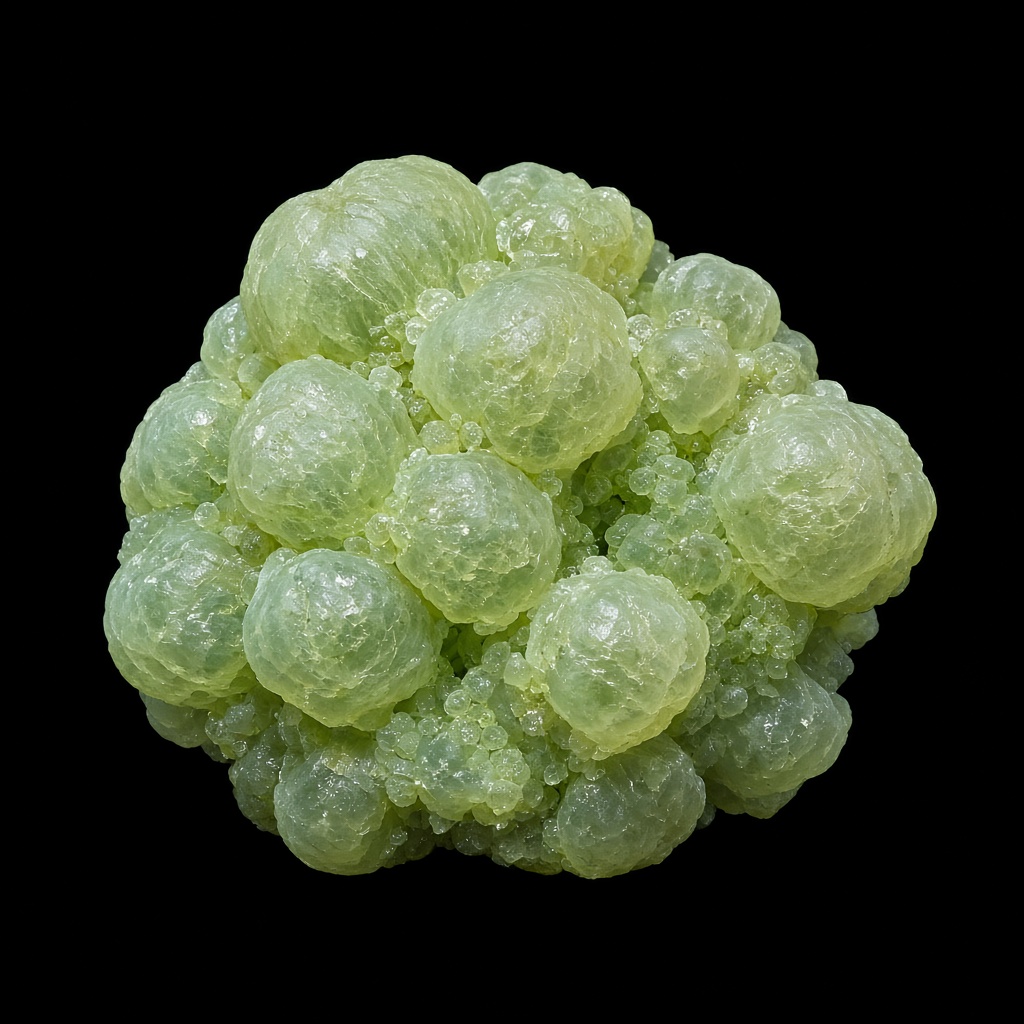
Translucent green botryoidal silicate popular for cabochons.
Identify Prehnite with RockScanAbout Prehnite
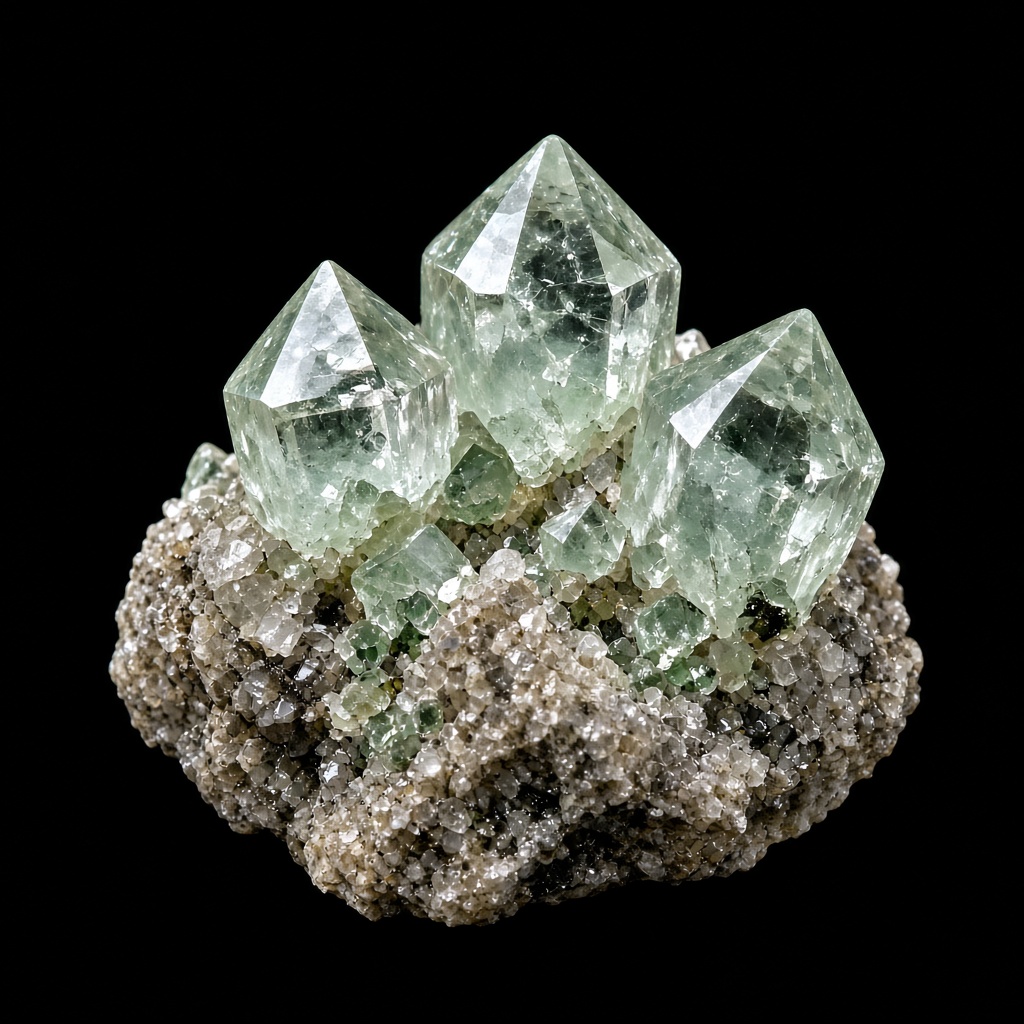
Prehnite typically forms botryoidal grape-like masses of soft green. Australian material is widely cut. May contain epidote inclusions. Softer than jade and lacks jade's toughness.
Prehnite belongs in a crystal identifier workflow because photo cues — color zoning, crystal habit, and surface luster — combine with measurable traits like Mohs 6–6.5 and specific gravity 2.80–2.95. Use RockScan’s camera to get a first-pass ID, then confirm with the checklist below.
Prehnite properties
| Mohs hardness | 6–6.5 |
|---|---|
| Crystal system | Orthorhombic |
| Luster | Vitreous to waxy |
| Color | Pale to medium green; yellow-green |
| Composition | Calcium aluminum hydroxy silicate |
| Formation | Hydrothermal veins in mafic volcanic rocks |
| Occurrence | Australia, South Africa, USA, France |
| Specific gravity | 2.80–2.95 |
| Cleavage | Distinct |
How to identify Prehnite
- Botryoidal green masses
- Hardness ~6–6.5
- Often associated with zeolite assemblages
Collector notes
- First mineral named after a person (Colonel Prehn)
- Can form attractive 'epidote in prehnite' specimens
Value context: Even translucent green without heavy inclusions prices best.
Prehnite FAQ
How do you identify Prehnite?
Prehnite (Ca₂Al(AlSi₃O₁₀)(OH)₂) is typically recognized by pale to medium green; yellow-green color, vitreous to waxy luster, Mohs hardness 6–6.5, and orthorhombic crystal system. RockScan can suggest Prehnite from a photo and surface these checks on the result card.
What is Prehnite made of?
Prehnite composition: Calcium aluminum hydroxy silicate. It forms via hydrothermal veins in mafic volcanic rocks and is found in Australia, South Africa, USA, France.
Is Prehnite valuable?
Even translucent green without heavy inclusions prices best.