Crystal & mineral guide
Ruby
Al₂O₃ (Corundum)
Red corundum and July birthstone — second only to diamond in hardness among common gems.
Identify Ruby with RockScanAbout Ruby
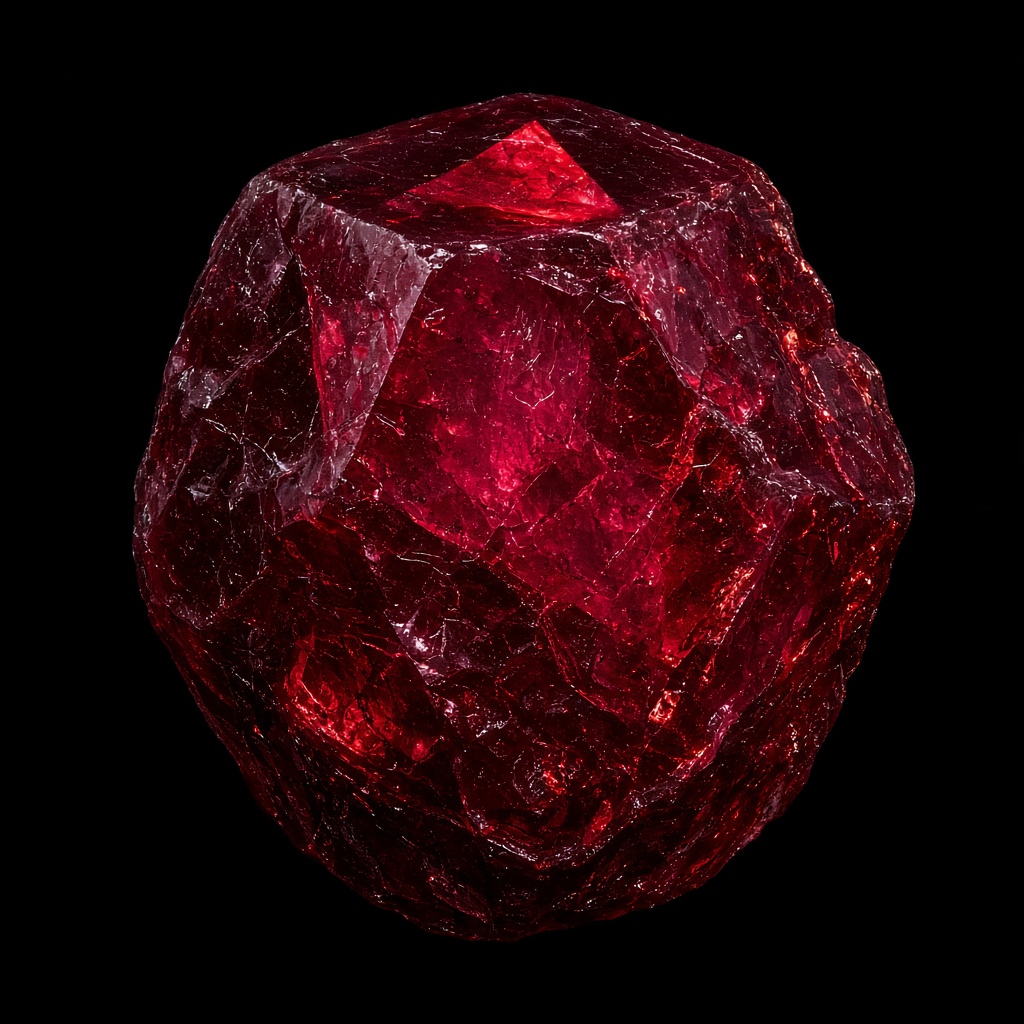
By definition ruby is red corundum; other colors are sapphire. Pigeon-blood red with strong fluorescence is legendary from Mogok, Myanmar. Heat treatment is widespread and accepted when disclosed. A staple of Gulf bridal and men's jewelry demand.
Ruby belongs in a crystal identifier workflow because photo cues — color zoning, crystal habit, and surface luster — combine with measurable traits like Mohs 9 and specific gravity 4.00. Use RockScan’s camera to get a first-pass ID, then confirm with the checklist below.
Ruby properties
| Mohs hardness | 9 |
|---|---|
| Crystal system | Trigonal |
| Luster | Vitreous to adamantine |
| Color | Pinkish red to blood red |
| Composition | Aluminum oxide with chromium |
| Formation | Metamorphic marble and basalt-related deposits |
| Occurrence | Myanmar, Mozambique, Thailand, Sri Lanka |
| Specific gravity | 4.00 |
| Cleavage | None (parting possible) |
How to identify Ruby
- Hardness 9; dense feel
- Strong red fluorescence under LW UV (many stones)
- Dichroscope shows red/orange-red
Collector notes
- Name from Latin 'ruber' — red
- Spinel was historically confused with ruby (Black Prince's Ruby)
Value context: Untreated fine color is rare; certificates strongly affect price.
Ruby FAQ
How do you identify Ruby?
Ruby (Al₂O₃ (Corundum)) is typically recognized by pinkish red to blood red color, vitreous to adamantine luster, Mohs hardness 9, and trigonal crystal system. RockScan can suggest Ruby from a photo and surface these checks on the result card.
What is Ruby made of?
Ruby composition: Aluminum oxide with chromium. It forms via metamorphic marble and basalt-related deposits and is found in Myanmar, Mozambique, Thailand, Sri Lanka.
Is Ruby valuable?
Untreated fine color is rare; certificates strongly affect price.