Crystal & mineral guide
Emerald
Be₃Al₂Si₆O₁₈ (Beryl)
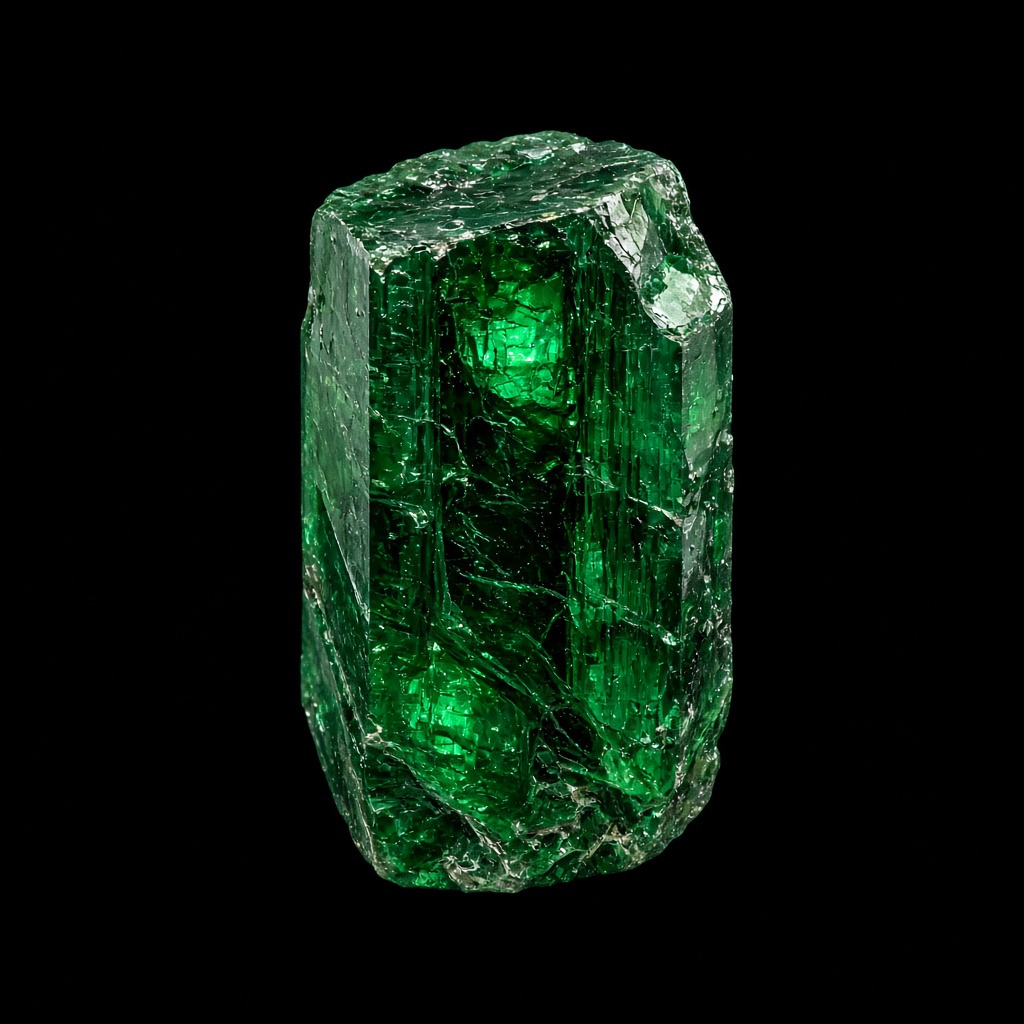
The green king of gems — May birthstone — usually included and often oiled.
Identify Emerald with RockScanAbout Emerald
Emerald's garden of inclusions (jardin) is expected; clarity is graded differently than diamond. Colombian stones are famed for warm pure green; Zambian for bluish-green. Most emeralds are clarity-enhanced with oils or resins — disclosure is mandatory in professional trade, including Dubai souk appraisals.
Emerald belongs in a crystal identifier workflow because photo cues — color zoning, crystal habit, and surface luster — combine with measurable traits like Mohs 7.5–8 and specific gravity 2.70–2.78. Use RockScan’s camera to get a first-pass ID, then confirm with the checklist below.
Emerald properties
| Mohs hardness | 7.5–8 |
|---|---|
| Crystal system | Hexagonal |
| Luster | Vitreous |
| Color | Vivid green |
| Composition | Beryl colored by chromium and/or vanadium |
| Formation | Hydrothermal veins and schists |
| Occurrence | Colombia, Zambia, Brazil, Afghanistan |
| Specific gravity | 2.70–2.78 |
| Cleavage | Imperfect |
How to identify Emerald
- Strong green with possible jardin inclusions
- Refractive index ~1.57–1.59
- Chelsea filter reaction varies by origin
Collector notes
- Cleopatra's mines in Egypt supplied ancient royalty
- A fine emerald can outprice a diamond of equal size
Value context: Color saturation drives value more than flawless clarity.
Emerald FAQ
How do you identify Emerald?
Emerald (Be₃Al₂Si₆O₁₈ (Beryl)) is typically recognized by vivid green color, vitreous luster, Mohs hardness 7.5–8, and hexagonal crystal system. RockScan can suggest Emerald from a photo and surface these checks on the result card.
What is Emerald made of?
Emerald composition: Beryl colored by chromium and/or vanadium. It forms via hydrothermal veins and schists and is found in Colombia, Zambia, Brazil, Afghanistan.
Is Emerald valuable?
Color saturation drives value more than flawless clarity.