Crystal & mineral guide
Howlite
Ca₂B₅SiO₉(OH)₅
White veined borate — the classic turquoise simulant when dyed blue.
Identify Howlite with RockScanAbout Howlite
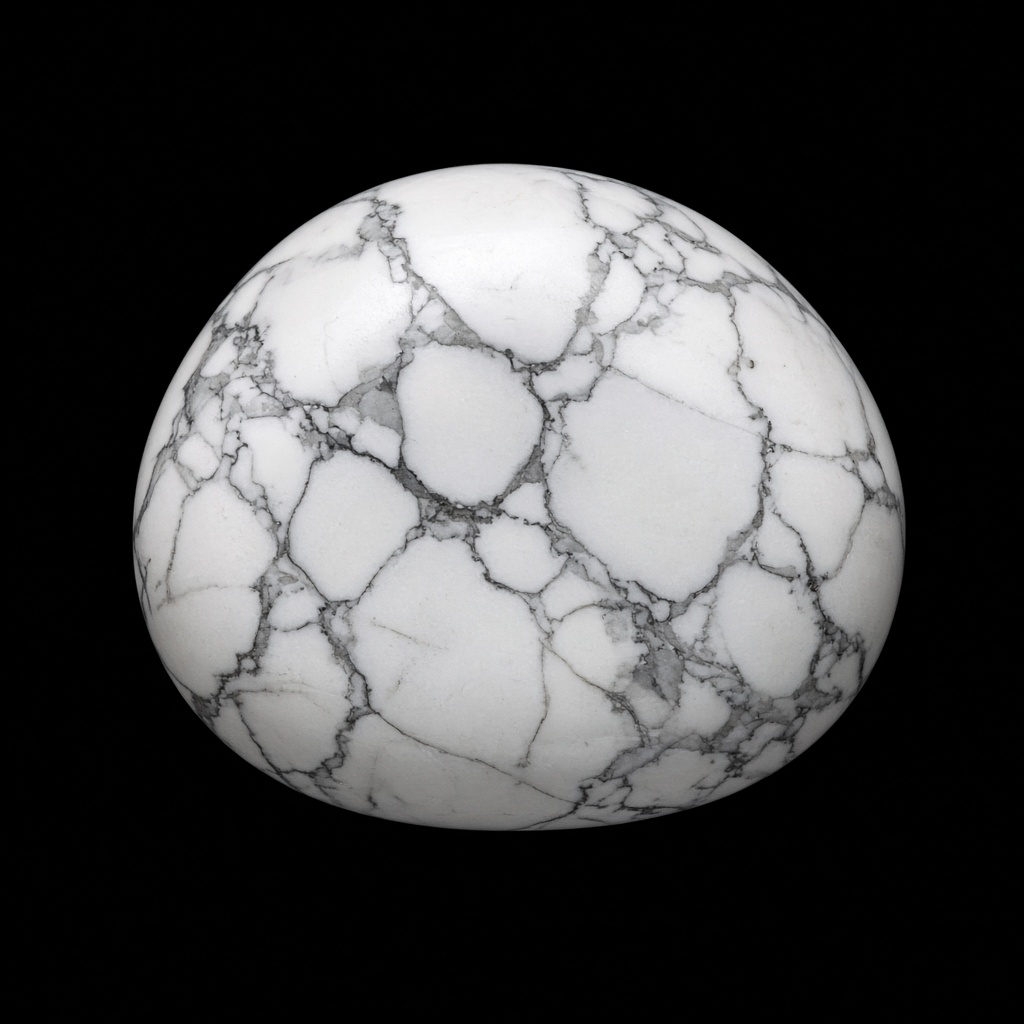
Natural howlite is white with gray web-like veins. Porous structure takes dye readily, producing turquoise lookalikes sold honestly as dyed howlite — or fraudulently as turquoise. Softness and white matrix under chips expose dye. Important teaching stone for Gulf and global trade authentication.
Howlite belongs in a crystal identifier workflow because photo cues — color zoning, crystal habit, and surface luster — combine with measurable traits like Mohs 3.5 and specific gravity 2.45–2.58. Use RockScan’s camera to get a first-pass ID, then confirm with the checklist below.
Howlite properties
| Mohs hardness | 3.5 |
|---|---|
| Crystal system | Monoclinic |
| Luster | Sub-vitreous to dull |
| Color | White with gray spiderweb veins; often dyed blue |
| Composition | Calcium borosilicate hydroxide |
| Formation | Evaporite-related borate deposits |
| Occurrence | California, Canada, Mexico, Turkey |
| Specific gravity | 2.45–2.58 |
| Cleavage | None |
How to identify Howlite
- White body with gray veins when undyed
- Soft (3.5); dye concentrates in fractures
- Lighter and softer than genuine turquoise
Collector notes
- Named for 19th-century mineralogist Henry How
- Dyed howlite flooded turquoise markets in recent decades
Value context: Natural white carving material is modest; dyed pieces are low-cost simulants.
Howlite FAQ
How do you identify Howlite?
Howlite (Ca₂B₅SiO₉(OH)₅) is typically recognized by white with gray spiderweb veins; often dyed blue color, sub-vitreous to dull luster, Mohs hardness 3.5, and monoclinic crystal system. RockScan can suggest Howlite from a photo and surface these checks on the result card.
What is Howlite made of?
Howlite composition: Calcium borosilicate hydroxide. It forms via evaporite-related borate deposits and is found in California, Canada, Mexico, Turkey.
Is Howlite valuable?
Natural white carving material is modest; dyed pieces are low-cost simulants.