Crystal & mineral guide
Graphite
C
Soft carbon allotrope — pencils, refractories, and battery anode feedstock.
Identify Graphite with RockScanAbout Graphite
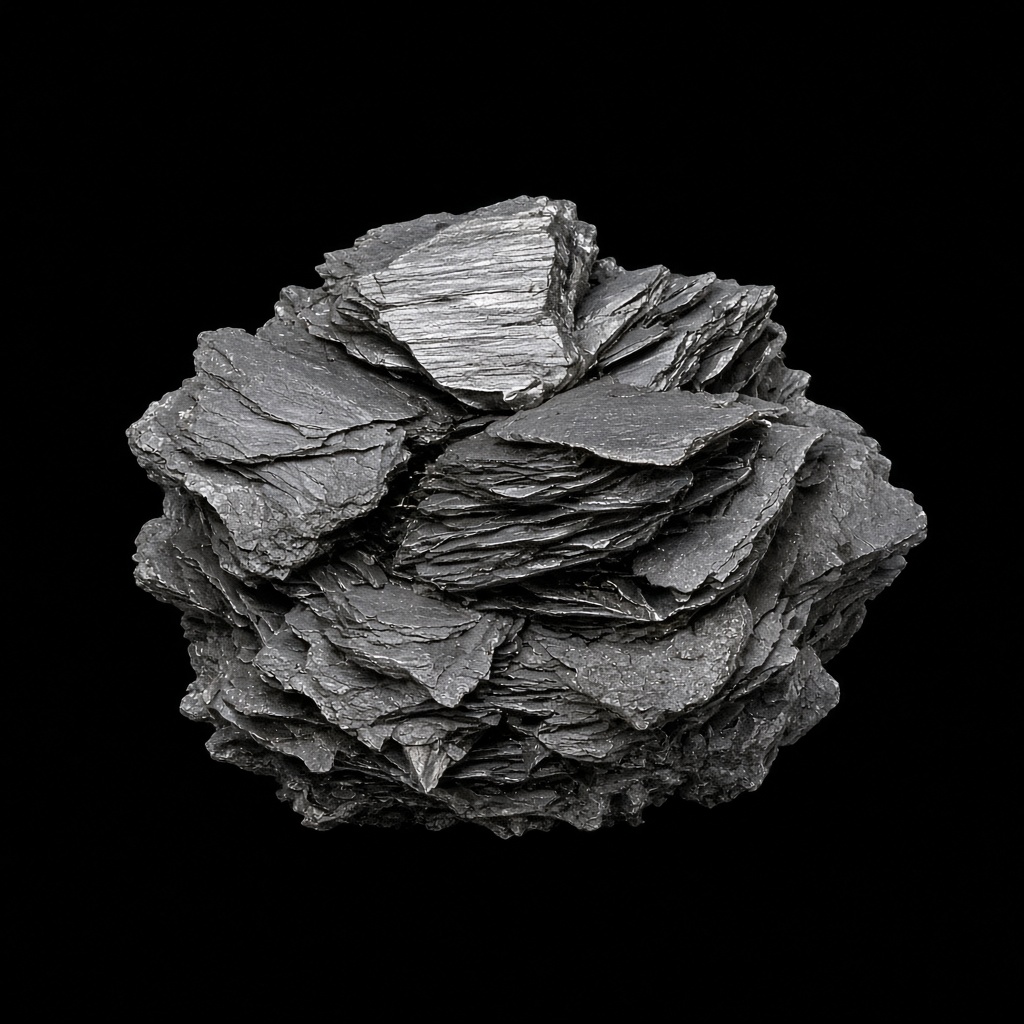
Graphite is soft, marks paper readily, and feels greasy. Same element as diamond with layered bonding. Distinguished from molybdenite by lower SG and black streak. Industrial demand includes steel refractories and lithium-ion battery anodes.
Graphite belongs in a crystal identifier workflow because photo cues — color zoning, crystal habit, and surface luster — combine with measurable traits like Mohs 1–2 and specific gravity 2.09–2.23. Use RockScan’s camera to get a first-pass ID, then confirm with the checklist below.
Graphite properties
| Mohs hardness | 1–2 |
|---|---|
| Crystal system | Hexagonal |
| Luster | Metallic to dull |
| Color | Steel-gray to black |
| Composition | Elemental carbon (layered sheets) |
| Formation | Metamorphism of carbonaceous sediments; some igneous |
| Occurrence | China, India, Brazil, Canada, Madagascar |
| Specific gravity | 2.09–2.23 |
| Cleavage | Perfect basal |
How to identify Graphite
- Marks paper easily; greasy
- Black streak
- Lower SG than molybdenite; often in schists
Collector notes
- Pencil 'lead' is graphite clay mix, not lead metal
- Diamond and graphite are carbon polymorphs
Value context: Industrial flake/vein grades by purity and flake size.
Graphite FAQ
How do you identify Graphite?
Graphite (C) is typically recognized by steel-gray to black color, metallic to dull luster, Mohs hardness 1–2, and hexagonal crystal system. RockScan can suggest Graphite from a photo and surface these checks on the result card.
What is Graphite made of?
Graphite composition: Elemental carbon (layered sheets). It forms via metamorphism of carbonaceous sediments; some igneous and is found in China, India, Brazil, Canada, Madagascar.
Is Graphite valuable?
Industrial flake/vein grades by purity and flake size.