Crystal & mineral guide
Conglomerate
Coarse clastic sedimentary rock
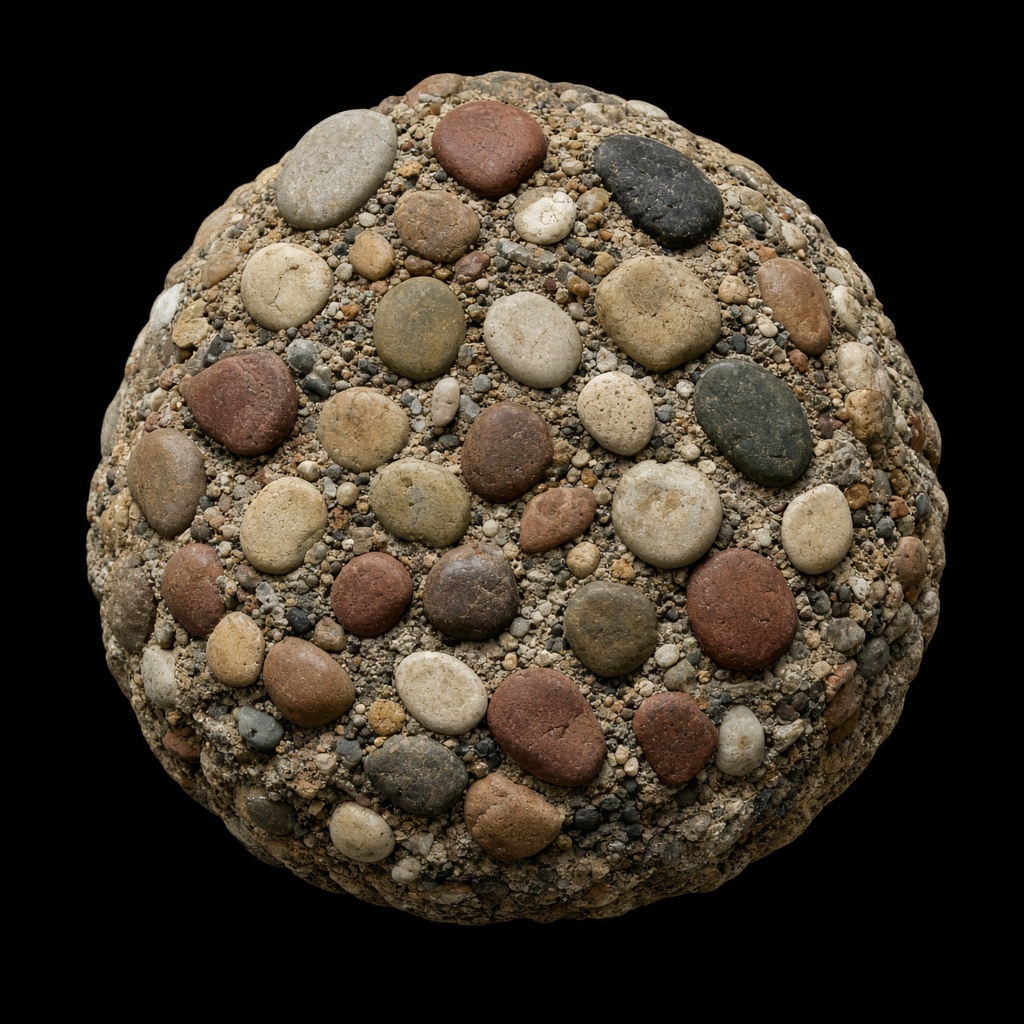
Rounded gravel in matrix — records high-energy transport.
Identify Conglomerate with RockScanAbout Conglomerate
Conglomerate contains rounded pebbles cemented in a finer matrix. Rounding indicates prolonged transport. Breccia is the angular counterpart. Used as teaching rock for depositional energy and as occasional decorative stone.
Conglomerate belongs in a crystal identifier workflow because photo cues — color zoning, crystal habit, and surface luster — combine with measurable traits like Mohs Variable and specific gravity 2.4–2.8. Use RockScan’s camera to get a first-pass ID, then confirm with the checklist below.
Conglomerate properties
| Mohs hardness | Variable |
|---|---|
| Crystal system | Clastic aggregate |
| Luster | Dull |
| Color | Multicolor rounded clasts |
| Composition | Rounded gravel clasts + sand matrix + cement |
| Formation | High-energy deposition of rounded pebbles |
| Occurrence | Worldwide alluvial and shoreline deposits |
| Specific gravity | 2.4–2.8 |
| Cleavage | None |
How to identify Conglomerate
- Rounded pebbles >2 mm in matrix
- Contrast with angular breccia
- Clast lithologies vary
Collector notes
- Clast composition fingerprints source terranes
- Some conglomerates host placer gold in matrix
Value context: Mostly geologic interest; polished slabs for decorative stone.
Conglomerate FAQ
How do you identify Conglomerate?
Conglomerate (Coarse clastic sedimentary rock) is typically recognized by multicolor rounded clasts color, dull luster, Mohs hardness Variable, and clastic aggregate crystal system. RockScan can suggest Conglomerate from a photo and surface these checks on the result card.
What is Conglomerate made of?
Conglomerate composition: Rounded gravel clasts + sand matrix + cement. It forms via high-energy deposition of rounded pebbles and is found in Worldwide alluvial and shoreline deposits.
Is Conglomerate valuable?
Mostly geologic interest; polished slabs for decorative stone.