Crystal & mineral guide
Stibnite
Sb₂S₃
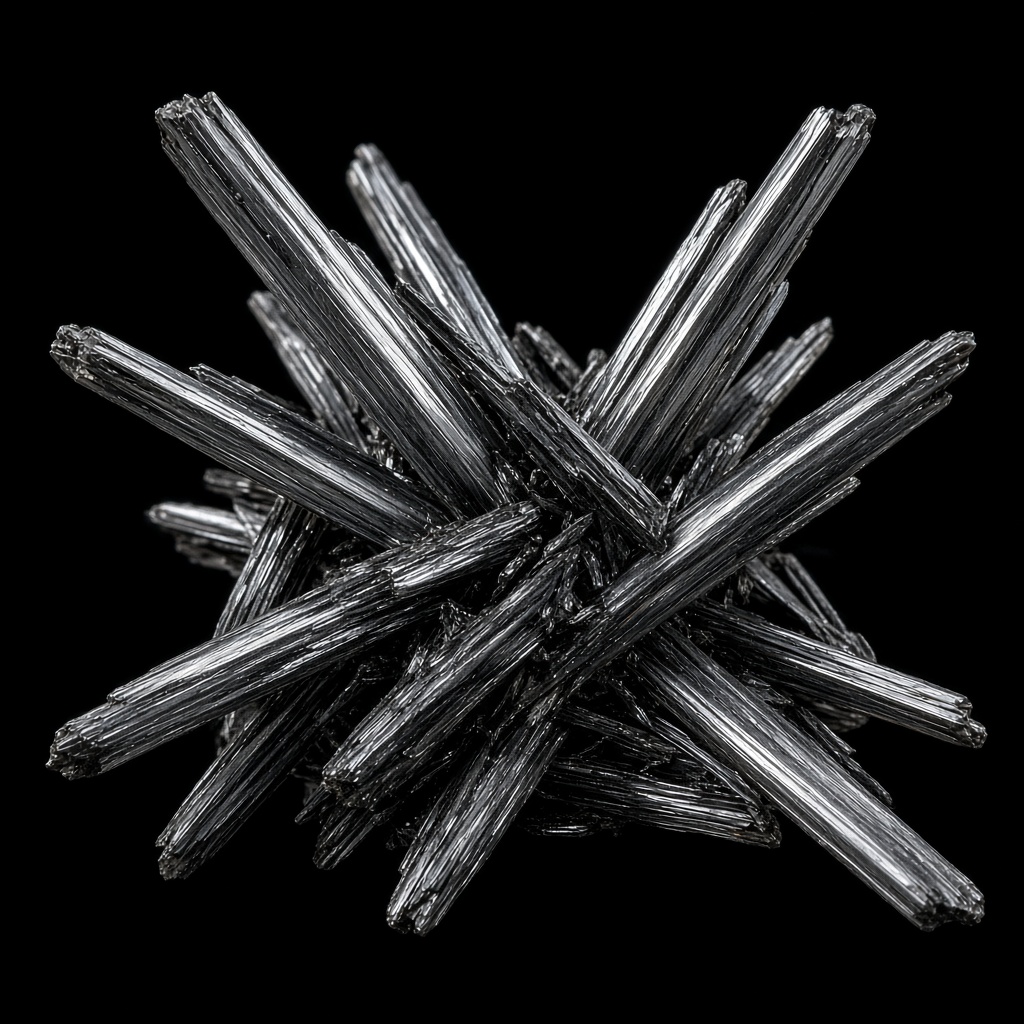
Primary antimony ore — slender metallic prismatic crystals.
Identify Stibnite with RockScanAbout Stibnite
Stibnite forms spectacular radiating metallic sprays. Soft enough to scratch with a fingernail. Antimony is used in flame retardants and alloys. Classic specimens from China and Romania. Flexible cleavage flakes are diagnostic.
Stibnite belongs in a crystal identifier workflow because photo cues — color zoning, crystal habit, and surface luster — combine with measurable traits like Mohs 2 and specific gravity 4.5–4.6. Use RockScan’s camera to get a first-pass ID, then confirm with the checklist below.
Stibnite properties
| Mohs hardness | 2 |
|---|---|
| Crystal system | Orthorhombic |
| Luster | Metallic |
| Color | Lead-gray with iridescent tarnish |
| Composition | Antimony trisulfide |
| Formation | Low-temperature hydrothermal veins |
| Occurrence | China, Romania, Japan, USA |
| Specific gravity | 4.5–4.6 |
| Cleavage | Perfect |
How to identify Stibnite
- Lead-gray metallic prisms/sprays
- Very soft (2)
- Perfect cleavage; flexible thin flakes
Collector notes
- Antimony from stibnite was used in ancient cosmetics (kohl precursors)
- Can melt in a candle flame
Value context: Ore by Sb content; aesthetic crystal sprays are collector favorites.
Stibnite FAQ
How do you identify Stibnite?
Stibnite (Sb₂S₃) is typically recognized by lead-gray with iridescent tarnish color, metallic luster, Mohs hardness 2, and orthorhombic crystal system. RockScan can suggest Stibnite from a photo and surface these checks on the result card.
What is Stibnite made of?
Stibnite composition: Antimony trisulfide. It forms via low-temperature hydrothermal veins and is found in China, Romania, Japan, USA.
Is Stibnite valuable?
Ore by Sb content; aesthetic crystal sprays are collector favorites.