Crystal & mineral guide
Chalcopyrite
CuFeS₂
Primary copper ore sulfide — softer and deeper yellow than pyrite.
Identify Chalcopyrite with RockScanAbout Chalcopyrite
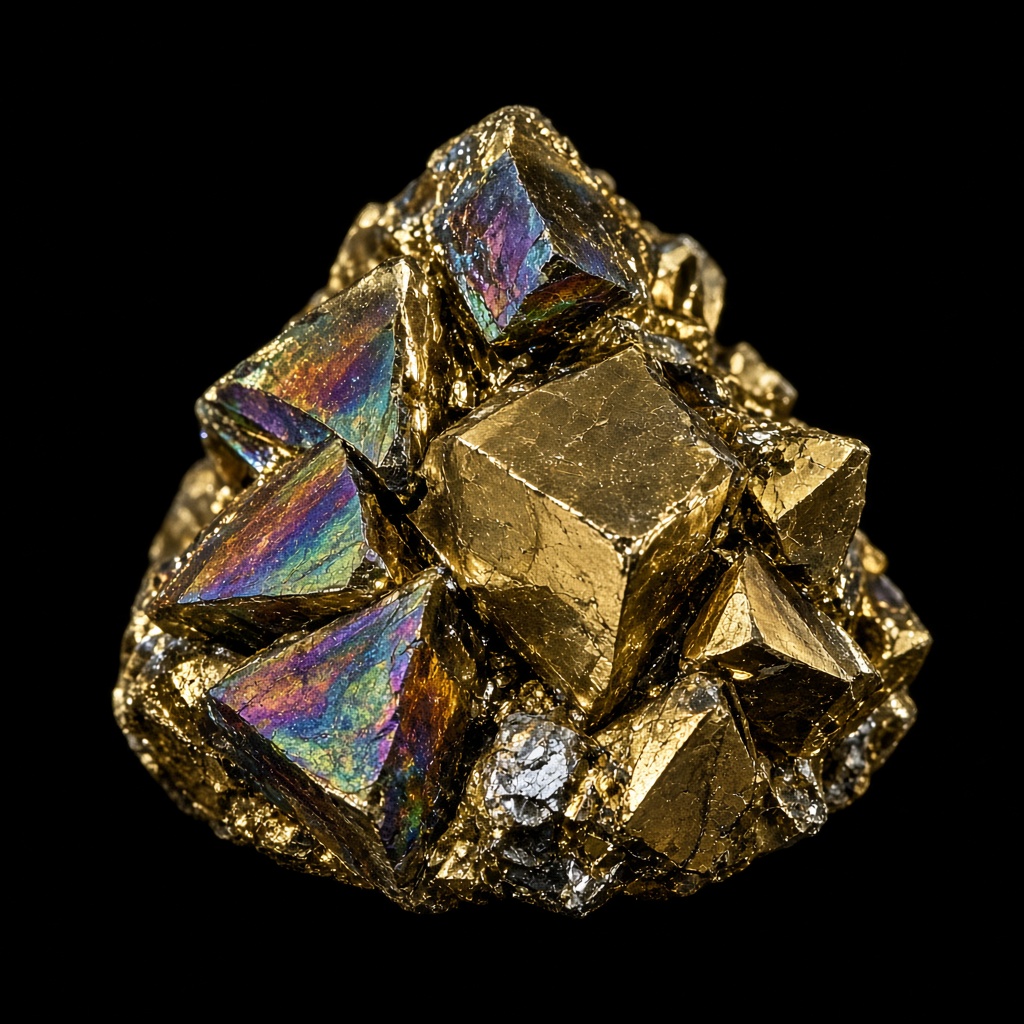
Chalcopyrite is the world's main copper ore mineral. Softer than pyrite, often tarnishes with iridescent 'peacock' colors. Key feedstock for porphyry copper mines that supply global electrical and construction demand. Greenish-black streak.
Chalcopyrite belongs in a crystal identifier workflow because photo cues — color zoning, crystal habit, and surface luster — combine with measurable traits like Mohs 3.5–4 and specific gravity 4.1–4.3. Use RockScan’s camera to get a first-pass ID, then confirm with the checklist below.
Chalcopyrite properties
| Mohs hardness | 3.5–4 |
|---|---|
| Crystal system | Tetragonal |
| Luster | Metallic |
| Color | Brass-yellow; may iridesce (peacock ore) |
| Composition | Copper iron sulfide |
| Formation | Hydrothermal veins and porphyry copper systems |
| Occurrence | Worldwide; Chile, Peru, USA, Canada, Indonesia |
| Specific gravity | 4.1–4.3 |
| Cleavage | Poor |
How to identify Chalcopyrite
- Softer than pyrite (scratched by steel more easily)
- Deeper yellow; tetragonal crystals
- Greenish-black streak; may show peacock tarnish
Collector notes
- Supplies the majority of mined copper worldwide
- Often hosts gold and other byproduct metals
Value context: Ore valued by Cu grade and recoverable byproducts; specimens show iridescence.
Chalcopyrite FAQ
How do you identify Chalcopyrite?
Chalcopyrite (CuFeS₂) is typically recognized by brass-yellow; may iridesce (peacock ore) color, metallic luster, Mohs hardness 3.5–4, and tetragonal crystal system. RockScan can suggest Chalcopyrite from a photo and surface these checks on the result card.
What is Chalcopyrite made of?
Chalcopyrite composition: Copper iron sulfide. It forms via hydrothermal veins and porphyry copper systems and is found in Worldwide; Chile, Peru, USA, Canada, Indonesia.
Is Chalcopyrite valuable?
Ore valued by Cu grade and recoverable byproducts; specimens show iridescence.