Crystal & mineral guide
Cinnabar
HgS
Primary mercury ore — vivid red, extremely dense, and toxic if mishandled.
Identify Cinnabar with RockScanAbout Cinnabar
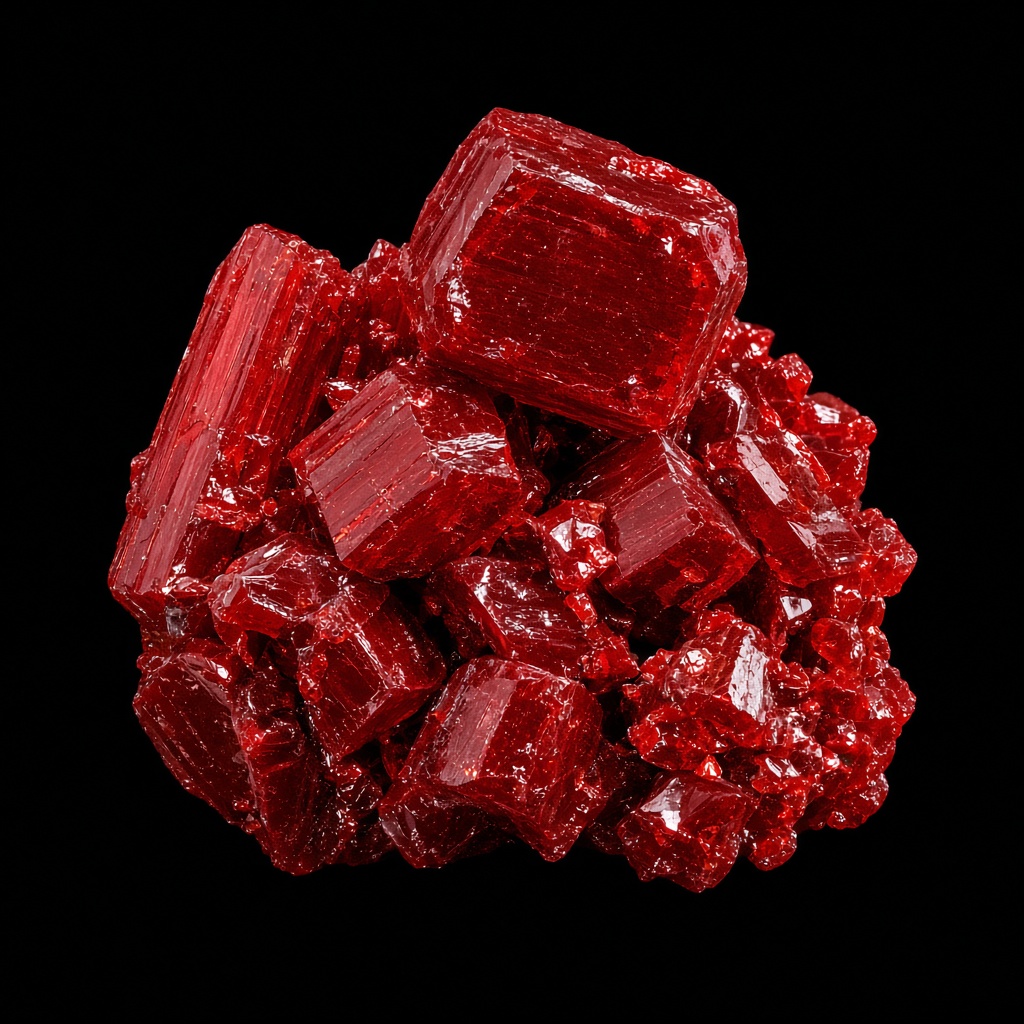
Cinnabar is the chief mercury ore with unmistakable scarlet color and high density. Soft powder was historic vermilion pigment. Handle with care — mercury toxicity. Not a jewelry stone; important for ore buyers and mineral collectors with proper precautions.
Cinnabar belongs in a crystal identifier workflow because photo cues — color zoning, crystal habit, and surface luster — combine with measurable traits like Mohs 2–2.5 and specific gravity 8.0–8.2. Use RockScan’s camera to get a first-pass ID, then confirm with the checklist below.
Cinnabar properties
| Mohs hardness | 2–2.5 |
|---|---|
| Crystal system | Trigonal |
| Luster | Adamantine to dull |
| Color | Cochineal red |
| Composition | Mercury sulfide |
| Formation | Low-temperature hydrothermal deposits |
| Occurrence | Spain (Almadén), China, USA (California), Slovenia |
| Specific gravity | 8.0–8.2 |
| Cleavage | Perfect |
How to identify Cinnabar
- Scarlet red; very heavy
- Soft; scarlet streak
- Often with quartz in hydrothermal veins
Collector notes
- Almadén, Spain was a historic mercury mining center for centuries
- Vermilion pigment was ground cinnabar
Value context: Ore by Hg content; specimen crystals collected under safety protocols.
Cinnabar FAQ
How do you identify Cinnabar?
Cinnabar (HgS) is typically recognized by cochineal red color, adamantine to dull luster, Mohs hardness 2–2.5, and trigonal crystal system. RockScan can suggest Cinnabar from a photo and surface these checks on the result card.
What is Cinnabar made of?
Cinnabar composition: Mercury sulfide. It forms via low-temperature hydrothermal deposits and is found in Spain (Almadén), China, USA (California), Slovenia.
Is Cinnabar valuable?
Ore by Hg content; specimen crystals collected under safety protocols.