Crystal & mineral guide
Rhodonite
MnSiO₃
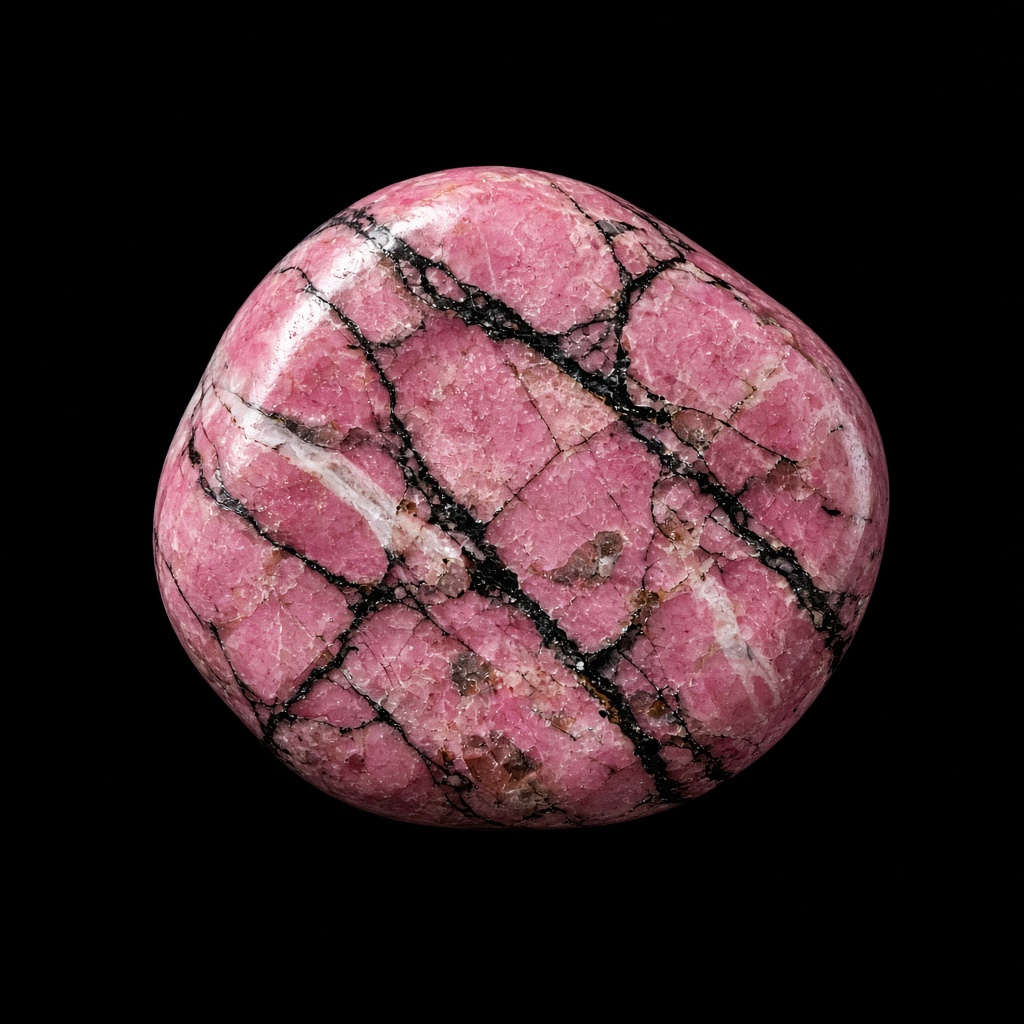
Pink manganese silicate with black veining — classic ornamental stone.
Identify Rhodonite with RockScanAbout Rhodonite
Rhodonite's pink body with black oxide veins is diagnostic. Harder and more durable than rhodochrosite. Used for carvings, cabochons, and decorative stone. Russian ornamental material has a long carving tradition.
Rhodonite belongs in a crystal identifier workflow because photo cues — color zoning, crystal habit, and surface luster — combine with measurable traits like Mohs 5.5–6.5 and specific gravity 3.5–3.7. Use RockScan’s camera to get a first-pass ID, then confirm with the checklist below.
Rhodonite properties
| Mohs hardness | 5.5–6.5 |
|---|---|
| Crystal system | Triclinic |
| Luster | Vitreous |
| Color | Pink to red with black manganese oxide veins |
| Composition | Manganese inosilicate |
| Formation | Metamorphic manganese deposits |
| Occurrence | Russia (Urals), Australia, USA, Sweden |
| Specific gravity | 3.5–3.7 |
| Cleavage | Perfect |
How to identify Rhodonite
- Pink with black dendritic veins
- Harder than rhodochrosite
- Perfect cleavage in two directions
Collector notes
- Name from Greek 'rhodon' — rose
- Often associated with other manganese ores
Value context: Even pink with attractive black contrast prices best for cabochons.
Rhodonite FAQ
How do you identify Rhodonite?
Rhodonite (MnSiO₃) is typically recognized by pink to red with black manganese oxide veins color, vitreous luster, Mohs hardness 5.5–6.5, and triclinic crystal system. RockScan can suggest Rhodonite from a photo and surface these checks on the result card.
What is Rhodonite made of?
Rhodonite composition: Manganese inosilicate. It forms via metamorphic manganese deposits and is found in Russia (Urals), Australia, USA, Sweden.
Is Rhodonite valuable?
Even pink with attractive black contrast prices best for cabochons.