Crystal & mineral guide
Amazonite
KAlSi₃O₈ (microcline)
Green microcline feldspar popular for cabochons and carvings.
Identify Amazonite with RockScanAbout Amazonite
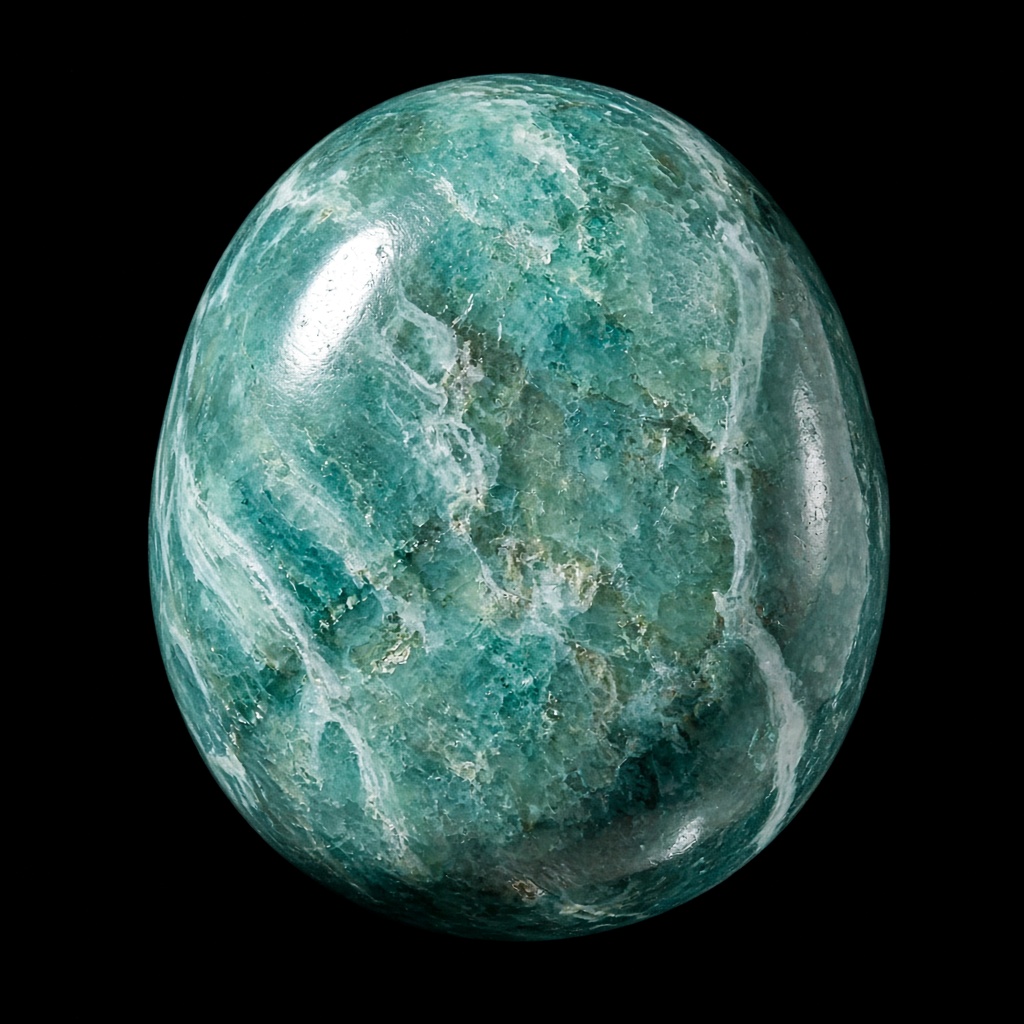
Amazonite shows turquoise-green color often with white grid perthite veining. Perfect cleavage requires careful cutting. Not from the Amazon despite the name — Colorado and Brazilian pegmatites are classic sources.
Amazonite belongs in a crystal identifier workflow because photo cues — color zoning, crystal habit, and surface luster — combine with measurable traits like Mohs 6–6.5 and specific gravity 2.56–2.58. Use RockScan’s camera to get a first-pass ID, then confirm with the checklist below.
Amazonite properties
| Mohs hardness | 6–6.5 |
|---|---|
| Crystal system | Triclinic |
| Luster | Vitreous |
| Color | Green to blue-green |
| Composition | Potassium feldspar (microcline) with lead/water color centers |
| Formation | Granitic pegmatites |
| Occurrence | Brazil, Colorado (USA), Madagascar, Russia |
| Specific gravity | 2.56–2.58 |
| Cleavage | Perfect |
How to identify Amazonite
- Green feldspar with grid-like white veins
- Perfect cleavage
- SG near 2.57
Collector notes
- Color linked to trace lead and radiation-related centers
- Often confused with jade by beginners
Value context: Even blue-green with attractive veining prices best for cabochons.
Amazonite FAQ
How do you identify Amazonite?
Amazonite (KAlSi₃O₈ (microcline)) is typically recognized by green to blue-green color, vitreous luster, Mohs hardness 6–6.5, and triclinic crystal system. RockScan can suggest Amazonite from a photo and surface these checks on the result card.
What is Amazonite made of?
Amazonite composition: Potassium feldspar (microcline) with lead/water color centers. It forms via granitic pegmatites and is found in Brazil, Colorado (USA), Madagascar, Russia.
Is Amazonite valuable?
Even blue-green with attractive veining prices best for cabochons.