Crystal & mineral guide
Carnelian
SiO₂ (chalcedony)
Aqiq (carnelian) — cornerstone of Islamic and Gulf heritage jewelry and seals.
Identify Carnelian with RockScanAbout Carnelian
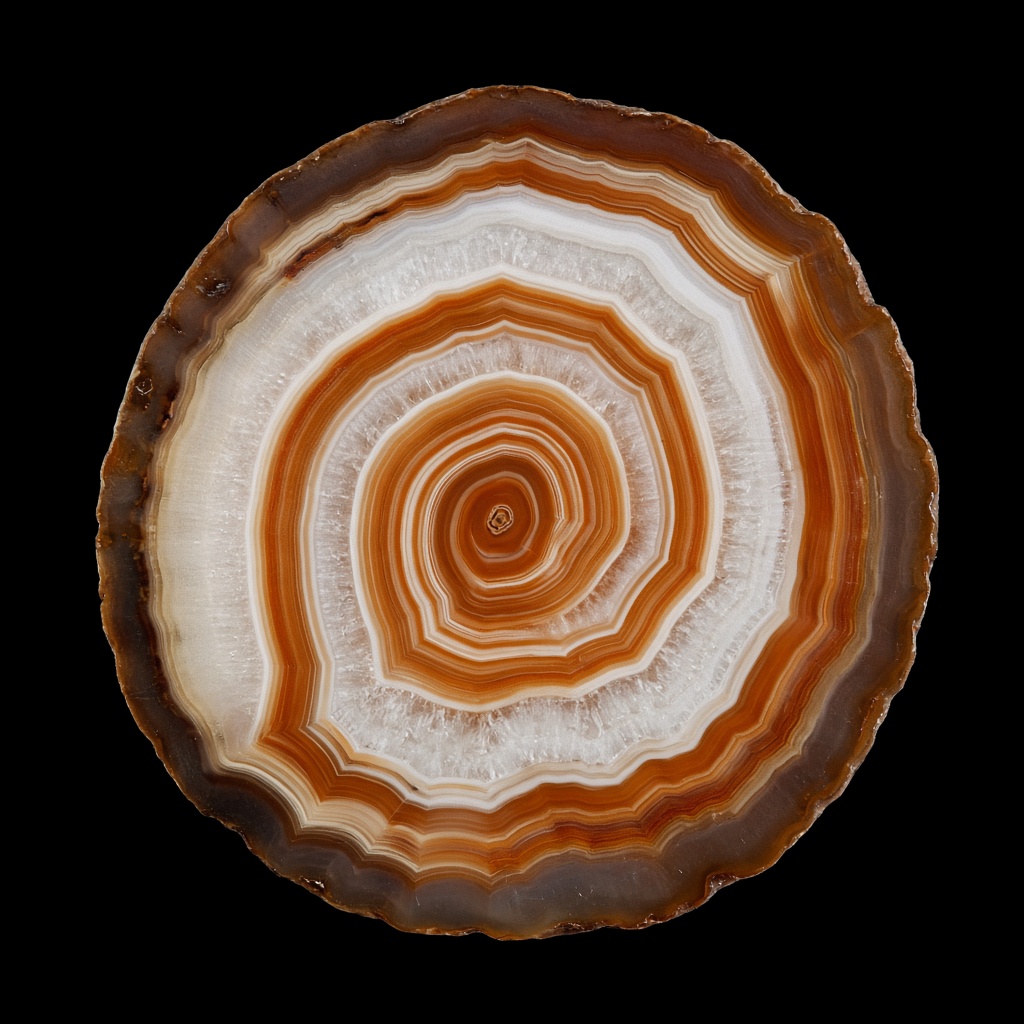
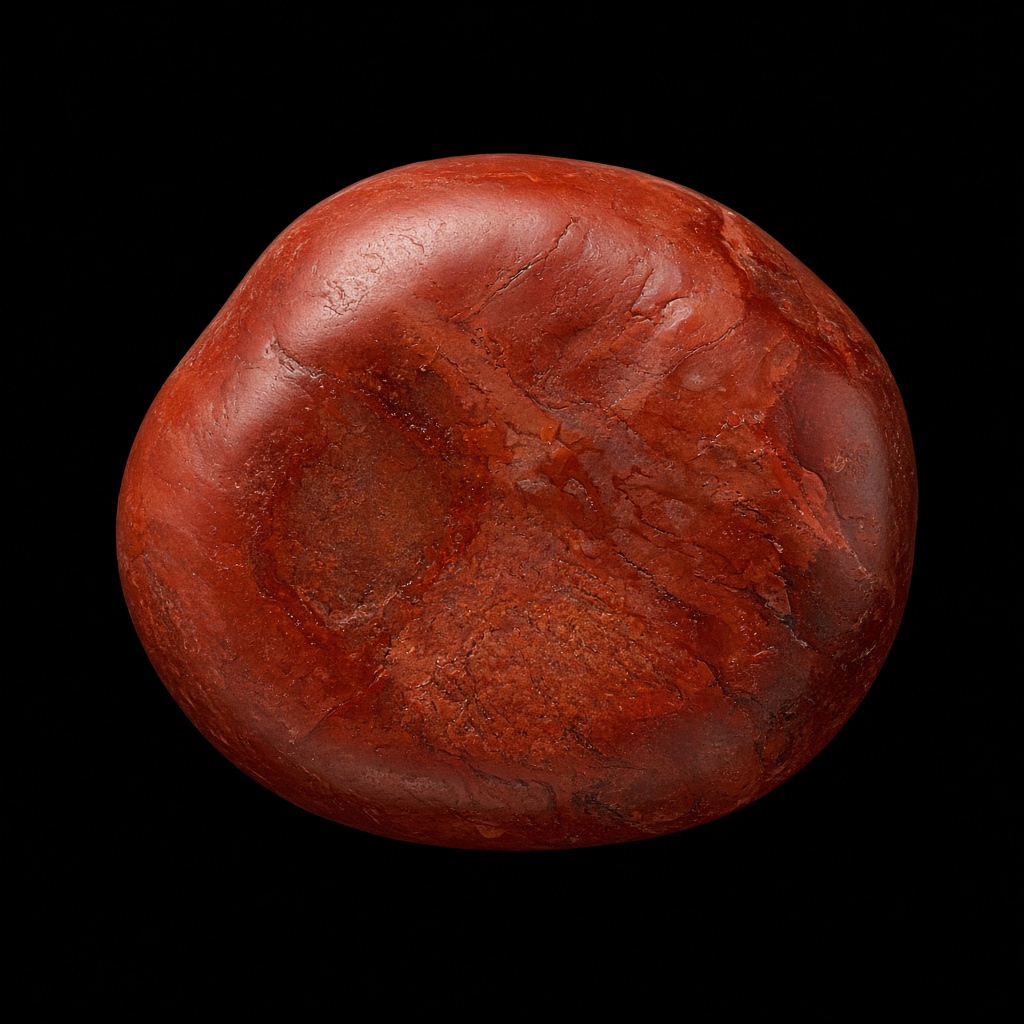
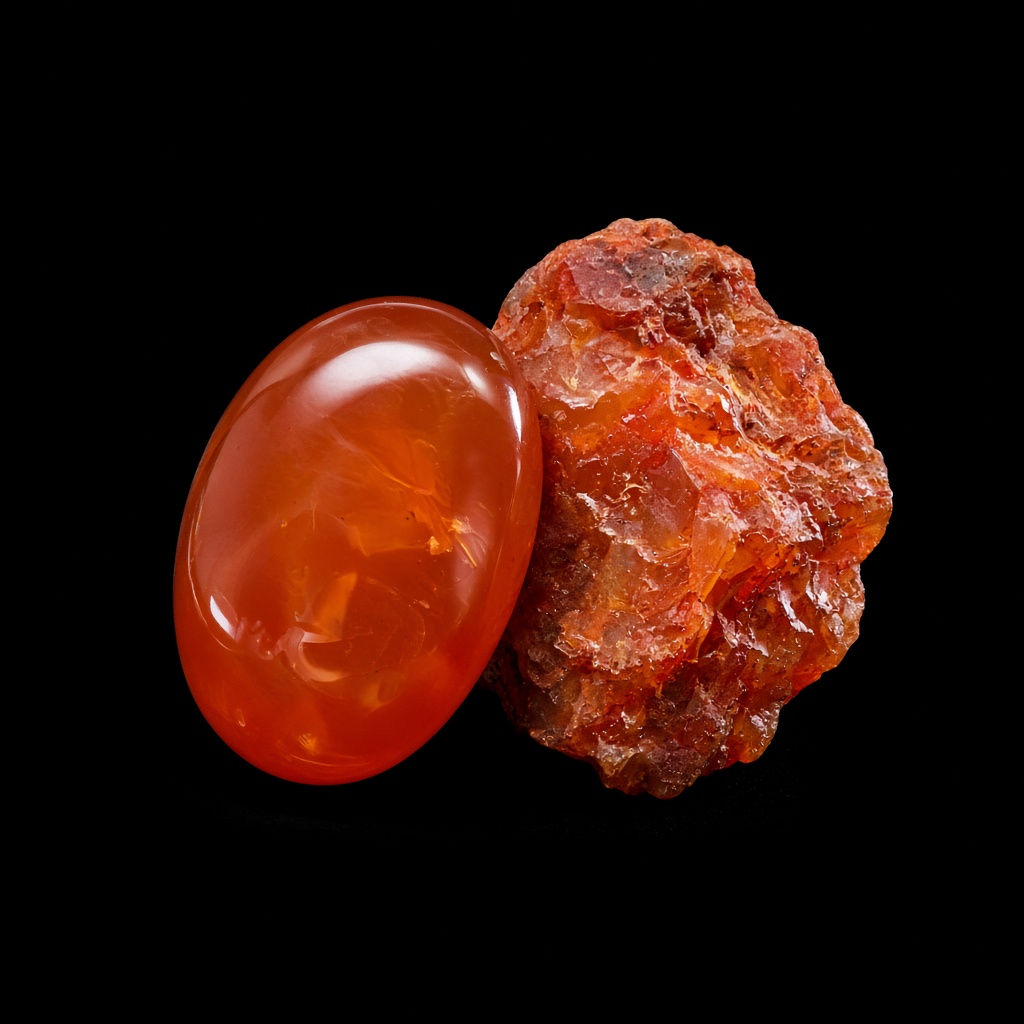
Carnelian is a translucent orange-red chalcedony long known as aqiq across Arabic-speaking markets. It remains a staple of men's rings, prayer beads, and engraved seals from the Gulf to South Asia. Color ranges from pale apricot to deep blood-orange; heat can deepen tone. Distinguish from dyed agate by even color and chalcedony texture under loupe.
Carnelian belongs in a crystal identifier workflow because photo cues — color zoning, crystal habit, and surface luster — combine with measurable traits like Mohs 6.5–7 and specific gravity 2.58–2.64. Use RockScan’s camera to get a first-pass ID, then confirm with the checklist below.
Carnelian properties
| Mohs hardness | 6.5–7 |
|---|---|
| Crystal system | Trigonal (microcrystalline) |
| Luster | Waxy to vitreous |
| Color | Orange-red to brownish red |
| Composition | Microcrystalline quartz with iron oxides |
| Formation | Silica deposition in sedimentary and volcanic hosts |
| Occurrence | India, Brazil, Uruguay, Madagascar; historic Arabian/Near East trade |
| Specific gravity | 2.58–2.64 |
| Cleavage | None |
How to identify Carnelian
- Translucent orange-red chalcedony without sharp crystal faces
- Hardness ~7; conchoidal fracture
- Even color vs blotchy dye on white agate
Collector notes
- Engraved carnelian seals were used across ancient Mesopotamia and the Islamic world
- In Gulf trade, fine aqiq is still preferred for men's silver rings
Value context: Deep even orange-red translucent cabochons lead heritage retail pricing.
Carnelian FAQ
How do you identify Carnelian?
Carnelian (SiO₂ (chalcedony)) is typically recognized by orange-red to brownish red color, waxy to vitreous luster, Mohs hardness 6.5–7, and trigonal (microcrystalline) crystal system. RockScan can suggest Carnelian from a photo and surface these checks on the result card.
What is Carnelian made of?
Carnelian composition: Microcrystalline quartz with iron oxides. It forms via silica deposition in sedimentary and volcanic hosts and is found in India, Brazil, Uruguay, Madagascar; historic Arabian/Near East trade.
Is Carnelian valuable?
Deep even orange-red translucent cabochons lead heritage retail pricing.