Crystal & mineral guide
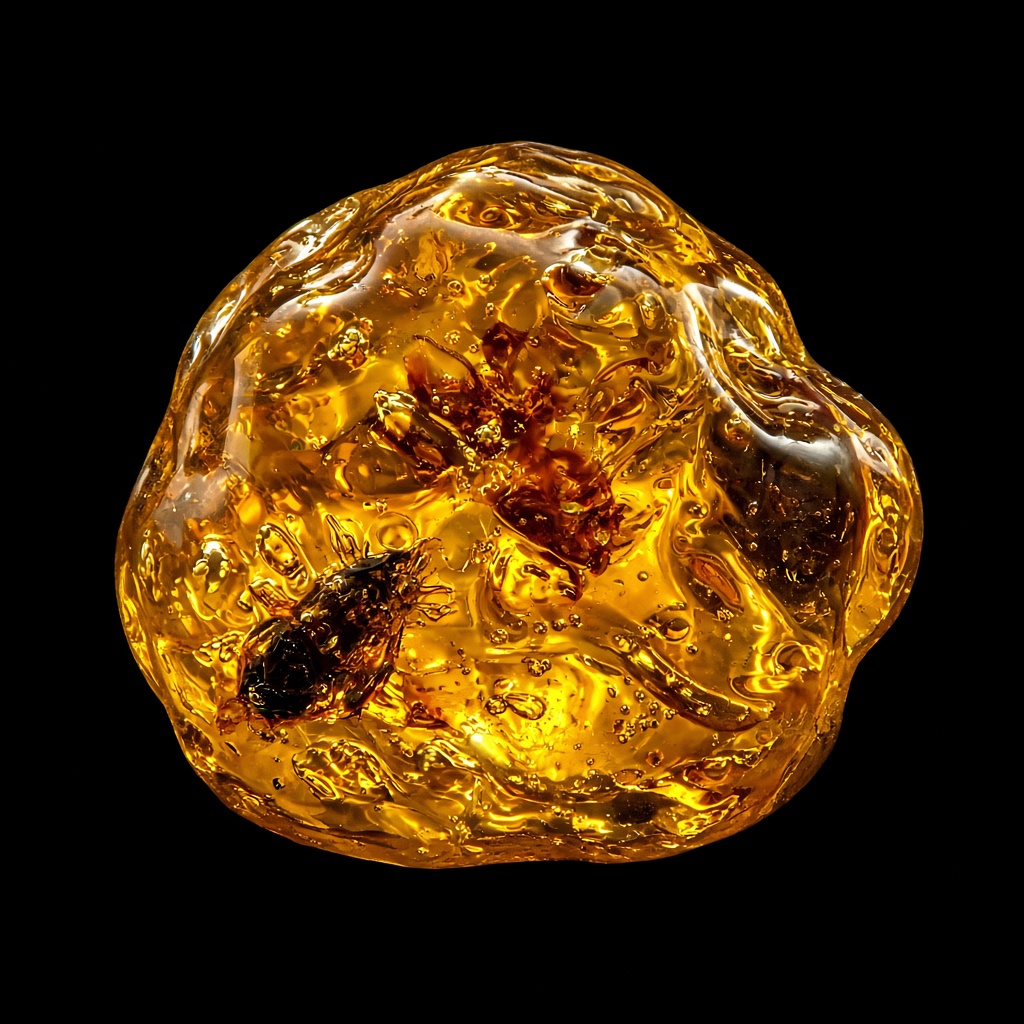
Amber
Fossil resin
Fossilized tree resin — sometimes preserving ancient insects.
Identify Amber with RockScanAbout Amber
Baltic amber (succinite) dominates jewelry. Dominican amber can be clearer and blue-fluorescent. Softness and heat sensitivity require gentle handling. Copal and plastic imitations are common — SG and UV help separate.
Amber belongs in a crystal identifier workflow because photo cues — color zoning, crystal habit, and surface luster — combine with measurable traits like Mohs 2–2.5 and specific gravity 1.05–1.10. Use RockScan’s camera to get a first-pass ID, then confirm with the checklist below.
Amber properties
| Mohs hardness | 2–2.5 |
|---|---|
| Crystal system | Amorphous |
| Luster | Resinous |
| Color | Honey, cognac, cherry, green (rare) |
| Composition | Polymerized plant resins (succinite common) |
| Formation | Fossilization of tree resin over millions of years |
| Occurrence | Baltic region, Dominican Republic, Mexico, Myanmar |
| Specific gravity | 1.05–1.10 |
| Cleavage | None |
How to identify Amber
- Very light SG — can float in saltwater
- Warm feel; resinous luster
- UV fluorescence common
Collector notes
- Some amber exceeds 40 million years in age
- Insect inclusions of scientific interest should be ethically sourced
Value context: Clear stones with rare intact inclusions are museum-grade.
Amber FAQ
How do you identify Amber?
Amber (Fossil resin) is typically recognized by honey, cognac, cherry, green (rare) color, resinous luster, Mohs hardness 2–2.5, and amorphous crystal system. RockScan can suggest Amber from a photo and surface these checks on the result card.
What is Amber made of?
Amber composition: Polymerized plant resins (succinite common). It forms via fossilization of tree resin over millions of years and is found in Baltic region, Dominican Republic, Mexico, Myanmar.
Is Amber valuable?
Clear stones with rare intact inclusions are museum-grade.