Crystal & mineral guide
Trilobite
Trilobita (extinct arthropod)
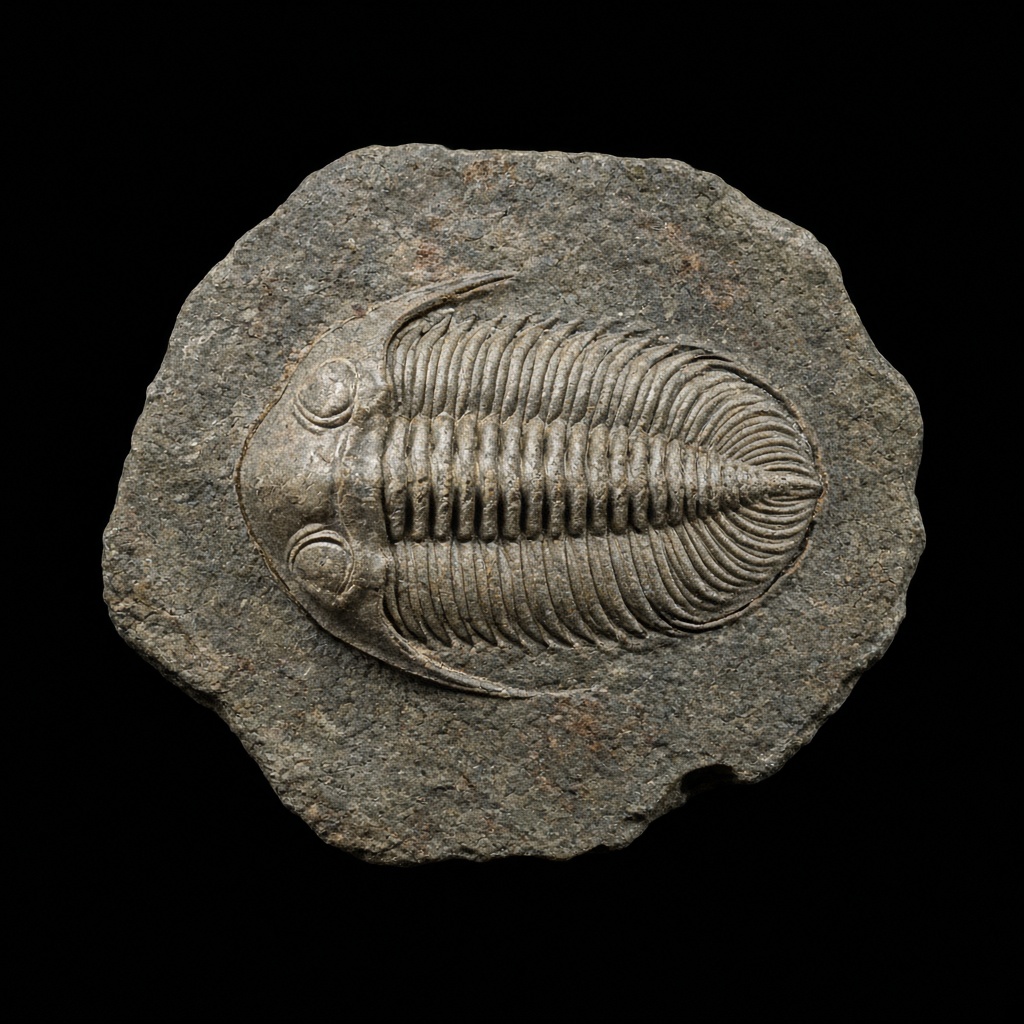
Paleozoic arthropod fossil — three-lobed body plan is diagnostic.
Identify Trilobite with RockScanAbout Trilobite
Trilobites show cephalon, thorax, and pygidium with axial and pleural lobes. Moroccan Ordovician–Devonian material dominates the commercial fossil market. Watch for composites and carved fakes. Important index fossils for Paleozoic biostratigraphy.
Trilobite belongs in a crystal identifier workflow because photo cues — color zoning, crystal habit, and surface luster — combine with measurable traits like Mohs 3–4 (in matrix) and specific gravity 2.5–2.8. Use RockScan’s camera to get a first-pass ID, then confirm with the checklist below.
Trilobite properties
| Mohs hardness | 3–4 (in matrix) |
|---|---|
| Crystal system | Fossil aggregate |
| Luster | Dull to vitreous (shell) |
| Color | Gray, brown, black in shale/limestone |
| Composition | Calcite exoskeleton in sedimentary matrix |
| Formation | Paleozoic marine sediment burial |
| Occurrence | Morocco, USA (Utah/New York), Russia, Czechia |
| Specific gravity | 2.5–2.8 |
| Cleavage | None |
How to identify Trilobite
- Three-lobed longitudinal division
- Segmented thorax
- Often in shale/limestone matrix
Collector notes
- Among the earliest complex animals with eyes
- Some species could enroll like modern pill bugs
Value context: Complete articulated specimens and rare genera price far above common fragments.
Trilobite FAQ
How do you identify Trilobite?
Trilobite (Trilobita (extinct arthropod)) is typically recognized by gray, brown, black in shale/limestone color, dull to vitreous (shell) luster, Mohs hardness 3–4 (in matrix), and fossil aggregate crystal system. RockScan can suggest Trilobite from a photo and surface these checks on the result card.
What is Trilobite made of?
Trilobite composition: Calcite exoskeleton in sedimentary matrix. It forms via paleozoic marine sediment burial and is found in Morocco, USA (Utah/New York), Russia, Czechia.
Is Trilobite valuable?
Complete articulated specimens and rare genera price far above common fragments.